Thursday, September 07, 2006

9/7/2006 thoughts

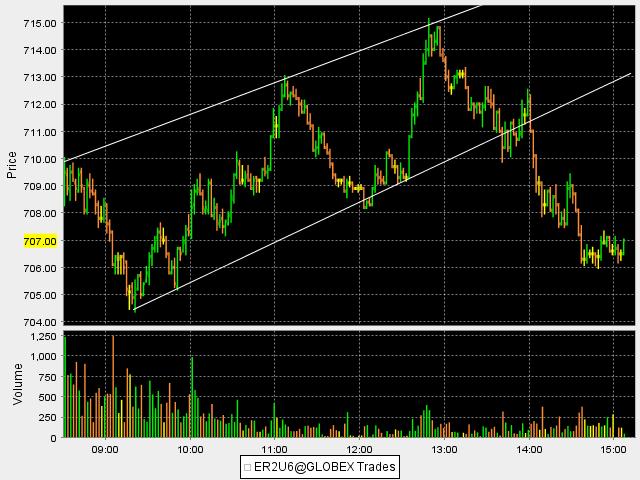
1. 705 is 1 month support, should in with confidence. 715 is yesterday's support, and become today's resistence.

2. Today's bounce from 708 to 715 is sharp, with small volumn, it's a short!


ER2 chart:

The Most Important Psychological Skill for Traders

by Brett Steenbarger

Link: Part One, Part Two

A holiday weekend is a good time to review trading journals, pick apart your results, and engage in self-assessment.

If your results are not what you hoped for, an important question to ask yourself is, "Why?".

There are three basic reasons why traders don't succeed:

1) They are trading a market and time frame that lacks opportunity;
2) They are trading a method that does not possess an objective edge in the marketplace;
3) They have a promising market, time frame, and method, but are not executing it properly.

Of these reasons, #3 is the most frustrating for traders. They feel as though they have the tools to succeed, but they themselves get in the way of their own success. Many times this is because emotional factors interfere with sound decision-making.

My recent post on techniques for dealing with emotional disruptions of trading offered a number of links to articles on cognitive, behavioral, and solution-focused methods for gaining self-control. Many more articles on trading psychology are available on my personal site, and a much more detailed explanation of the relationship between psychology and trading can be found in my book. It was because interest was so high in learning self-help methods for dealing with emotional disruptions of trading that I included step-by-step self-help manuals as the last two chapters of my latest book.

My hope is that these resources will help traders become their own mentors.

After my recent post, I received several emails asking a similar question: "What is the best technique I can use for getting myself in control?"

Most psychological disruptions of trading involve either under-control or over-control: traders either become impulsive and lose discipline when frustrated (resulting in overtrading), or they become anxious and negative (and miss out on opportunity).

The key to understanding these problems, as I stress in my book, is to recognize that they are generally state-dependent. They do not occur at all times, under all conditions. Rather, they are triggered by particular events and associated emotional states. The trader who is frustrated or depressed trades differently from the trader who is in a normal, non-aroused emotional state. This is because of brain physiology: we activate different brain regions and functions under conditions of arousal vs. conditions of calm concentration.

For this reason, the most important psychological skill for traders is simply the ability to control your body's level of arousal. It is near-impossible to maintain a collected frame of mind when your body is racing in flight-or-fight response patterns or withdrawing in the face of defeat. If you can control the body, you are much better positioned to achieve cognitive and emotional control.

Three steps can help you gain rapid control if you practice them frequently:

1) Stop whatever you are doing and take a break;

2) Sit comfortably and focus your attention on something neutral. As I mention in my book, a sound and light machine is ideal for this: you simply focus on the patterns of light and eliminate (as much as possible) stray thoughts. Biofeedback games can also be effective in focusing your attention;

3) Once you have your attention fixed, regulate your breathing by taking longer, deeper, and slower breaths. The slowing and deepening of the rate of your breathing will help slow your heart rate, lower your muscle tension, and reduce other biofeedback indicators of stress.

In the beginning, you may need to do this exercise for 10-15 minutes at a time a couple of times per day. As you become more skilled, you'll find that it takes less and less time to get yourself focused and calm. Eventually, just focusing your mind and taking a few deep breaths will get the job done. But it takes steady, consistent practice.

The exercise interrupts negative patterns of thought by controlling your concentration. It also slows your body down, which in turn helps you slow down racing thoughts. Because so many negative behavior patterns are triggered by states of frustration, heading off these states by proactively engaging in this exercise is especially effective.

Take a look at your P/L. How much money have you lost by not following your rules due to emotional disruption? If that figure is significant, the investment of time you spend learning these techniques will produce meaningful returns.

In my next post, we'll take a look at how you can integrate cognitive methods into the basic relaxation exercise.
My last post explained how psychological disruptions of trading are linked to state shifts that manifest themselves emotionally, cognitively, and physiologically. Very often these shifts involve states of heightened arousal due to frustration, fear, and anger. The previous post explained how these states can be defused by combining focused concentration with deepened, slowed breathing. With consistent practice, traders can become quite adept at calming their minds and bodies and interrupting processes that interfere with good decision making.

A related skill that I describe in The Psychology of Trading is "taking your emotional temperature." This simply means that you periodically stand outside yourself as an observer and notice your thoughts, feelings, and physical state. By making this self-observation a regular practice, you can become skilled at catching state shifts as they are occurring. This enables you to utilize the focusing and breathing exercises proactively, before emotional triggers can disrupt trading decisions.

Such a proactive use of the focus and breathing is especially effective when combined with cognitive techniques. Here's how to do it:

First off, I recommend that anyone trying these methods reduce their trading size significantly. By taking P/L off the table temporarily, it allows you to focus on developing your self-control. Then, with your success in the exercises, you can gradually build back to a normal trading size. (Note that if reducing your trading size by itself eliminates your emotional disruptions, that in itself may be your problem: you may be trading too large for your account size and your personal risk tolerance.)

Second, before adding cognitive components, it's necessary to truly master the focusing and breathing from the previous post. I generally have people practicing those methods at least twice a day for a full week before adding new components. The goal is to be able to calm yourself significantly with just a focused mind and a few deep, slow breaths. This takes consistent practice.

Once you can focus and relax yourself on demand, you're ready to add a cognitive module to your self-mentoring. Before you start trading, sit comfortably and vividly imagine market situations that would normally lead you to become fearful or frustrated. For example, you can "play a movie in your head" of the market moving against you and hitting your stop-loss point. The key is imagining the market action and your stop in vivid detail--while you are doing your deep, slow breathing. Then continue your "movie" by vividly imagining yourself taking the right course of action in that situation. Imagine how you would talk to yourself in that situation and what actions you'd take in the market--again, all the while keeping yourself calm and focused, breathing deeply and slowly.

You may need to repeat your "movies" several times with variations. In all, I recommend spending at least 15 minutes with this exercise prior to the market open. What you're doing is literally training yourself to stay calm and focused (and to do the right things) in situations that used to take you out of your game. By repeating these situations in your head many, many times, you normalize them (and your response to them) and make them familiar and non-threatening. Facing a situation again and again successfully in your mind prepares you to do the right things when those situations actually occur.

Notice that this method will work, not only for trading problems, but any situation that tends to trigger you and lead to unwanted reactions. Mental rehearsals under conditions of self control are a method for extending our free will, our ability to respond to events as we wish. This is not only helpful in trading, but in all of life.

Wednesday, September 06, 2006

9/6/2006 thoughts

Some thoughts on intraday trading: trend is No1, price not important. Need to focus on trend change signal : reach support, resistence, trendline continuation, trendline broken.


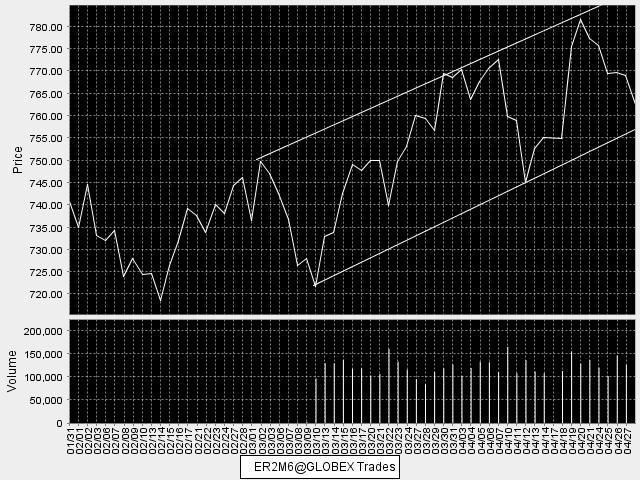
ER2 chart today


Actually yestoday there are lots of hints to market top:
  1. TNX up without reason.
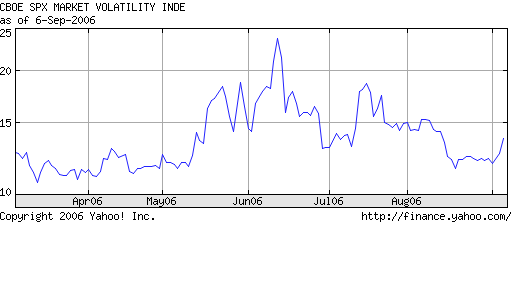
  2. VIX shows bottom out.
  3. DOW, SP close to year high, big resistence ahead.
  4. ER2 big wave >30p already. This wave is from 693.x to 729, about 35p.
  5. DOW & SP show tired sign, no strength at all.

$TNX was up 0.5 yestoday for no reason. It was a myth to me. Today it's clear, bond traders knew the news in advance. $TNX up one day before the news out. The lesson here is to find the clue from 蛛丝马迹.

Also, ^VIX showed bottom out yestoday. And today it proved market topped. See the chart below:


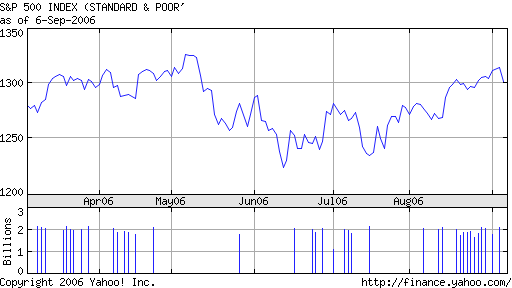
All SP, NAZ, DOW charts show top sign as below.

NAZ 6-month chart:


DOW 6-month chart:

SP500 6-month chart:

Tuesday, September 05, 2006

看了这篇文,让你少走10年弯路(转载)

Link: http://bestrongarm.blog.hexun.com/4973432_d.html

宏观和微观确实在投机实践中是可以达到几乎完美的融合,而不再是哲学意义和高度上的融合。我认识的一个朋友(也可以说是我的老师),他在交易上的确已经接 近了“无招胜有招”的境界,这在我以前是无法想象的。因为我非常看重细节和微观上的技术套路,也即我们常提到的所谓“交易系统”。通过对他的交易决策的研 究,我发现,真正达到将所有技术(传统分析技术、指标公式、波浪江恩、时间周期、趋势跟随)融合为一体是完全可以作到的,只不过需要经历非常痛苦思考、提 炼、再思考、再提炼的循环过程,而我们大多数人,在这种冶炼的过程中,或者由于我们的悟性不够,或者由于我们的韧性不够,因此,99%的人是无法在投机市 场中实现自己的升华和嬗变的,这个过程,我认为,叫做“炼金术”好象还不够贴切,我更愿意将她喻为一种“化蝶”的过程,再痛苦艰难,但如果我们坚持将专业 投机作为我们的理想和职业,那么我们就必须完成这一可能是非常漫长的转变。

  我的一个领悟是,以后的时间,我将不再满足于对我的交 易系统的一些技术细节的完善和发掘,我必须用更多时间去完成,可能有些人甚至认为是“毫无意义或浪费时间”的思考历练。这种抽象的思考不再境界式或粗线条 式的,这种抽象是必须建立在诸多细枝末节之上的超乎归纳综合的一种质变式的提升。我不知道,我这样讲,大家能否能引起共鸣。我再次感觉到语言的乏力,但我 知道,我必须要影着头皮,超越存在于语言之中的玄虚,完成自己生命和事业上真正的突破。

  我对这种突破的艰难性、复杂性、不确定性 已经有了足够充分和清醒的认识,我也知道,我毕生都无法完成这种突破的可能性也完全存在。但我知道,我心灵所指的那个方向,才是超越投机、超越交易者、甚 至超越市场、并几乎接近生命之道的那个方向,不管能否抵达,至少,我必须调校好自己的方向,对准她,然后迈出我的步伐。

  人们常说一句话,在期货市场中,纪律和心态控制重于一切。然而,我却要不客气的指出,这一切的前提,是你必须要有一套完善、经过市场考验的交易系统,否则,就有流于空谈的危险。

   在我自己的实践中,我在最终设计并完善了自己的交易系统之后,心态自然更加稳定、自信,而你也必然用最严格的纪律去遵循你系统指示的信号行事,因为违反 他,将把你置于非常不利的境地。在你和你的交易系统充分磨合而且你确信你的交易系统可以成功、灵敏的应付大多数市场变化的时候,你会发现,通过交易赚钱, 其实是一件轻松、快乐、自然、水到渠成的事情。一切都变得和谐,你终将远离并告别亏损,这就是我切身的体验。

  其实,我的这些体 验,对于初入投机行业的朋友来说,没有任何用处,或者说,是一些空话。但是,我对于朋友们的忠告是,一定要建立适合你自己的交易系统,无论你被市场掴的鼻 青脸肿,你必须重新站起来,再改善你的系统。不要惧怕复杂和繁琐,因为,这是你迈向成功、脱离亏损的唯一之途,别无他法。纪律和心态必须建立在科学有效的 系统之上,当然,这种系统,他可以是基于技术分析的,也可以是基于基本分析的,或是其他如周易预测技术的。我始终认为,感觉是无法长期可靠的,只有客观的 系统,才能保证你有客观的心态。 

  我认识的一位香港的专业恒指期货做手,他在恒指市场已经生存了近十年。他讲到,当年和他一起做恒指 的,有的改行了,有的破产了,他所认识的和他一起进入这个市场的并且至今还生存于该市场的,只有他一个。时间的力量超乎我们想象的强大,看对一两年、盈利 一两年并不足为奇。只有经历长时间的洗涤、磨砺和淘汰,才可以看出你真正的投机才能。而他的基于自己设计的数学模型在计算机上建立的交易系统,直到今天, 他仍然在完善和修正。从他的身上,我看到了一个“专业交易者”身上的“专业性”所在。同他相比,我只不过是个篮球爱好者,而他已经是NBA中驰骋的职业运 动员了。我回来做在车上的时候才想到,时间的积分和微分作用,在我的身上,刚刚显现。

  其实,对于每一个职业交易者而言,心里都明白交易系统的重要性。我最近有一个想法,将自己用了5年多时间建立自己交易系统的体验,整理成文字,期望能对大家最终构建自己的系统有所启发。
  
  建立一个真正经历市场考验的成熟可用的一致性的系统,我认为,必定会历经两个阶段。

  1。堆积
   我说的所谓的堆积,大概等同于“厚积薄发”的“厚积”的过程吧。在这个积累阶段,是大量储备各种知识、技巧、方法的阶段,强调的是尽最大可能,广泛占 有,兼收并蓄,甚至要发扬“囫囵吞枣”、“不求甚解”、“神农氏遍尝百草”的杂家精神,把你能收集到的一切素材,积淀到你的大脑,以备后用。

   积累从何而来?当然首先是书籍。你必须要有横扫一切大小金融书店的气概,不需要有太强的针对性,但必须有广泛性,中西并举,阅读各类金融、经济类书籍。 有条件的最好请老手开一个书单,这样阅读起来更有针对性,效率也更高。这大概就类似于古人所说的“熟读唐诗三百首”吧。我的经验是,以西方经典的技术分析 文丛开始下手,先开立一个20本左右的书单,英文水平高的最好直接阅读原版,用最简单的串行方式,将其一本本消灭。这整个过程完全没有任何投机取巧,过程 虽然枯燥冗长,却不可替代、不可跨越。而且,对于好书,要一遍又一遍的读,直到烂熟于胸为止。

  堆积的过程更多使用的智能,是记忆 和少量的推理。你首要的是,牢记书里的方法和教条,并不需要你有太多的怀疑主义和主观能动。因为这两者是必须在你有一定积累的基础上才会涉及。你如果可以 在国外任何一项标准智商测试中,轻松取得最前面两个级别的评分的话,我想,这个阶段对于你,可能只需要2-3年的时间,间中你还有余暇阅读些哲学、方法论 类似的书籍,起到旁征博引、互相贯通的意义。

  在阅读阶段,也不是我妄自菲薄,我认为应尽量少读国内的读物,而尽一切可能(如去国 外网站订购等)去不知疲倦的阅读西方的经典文丛,尤其是技术分析方面的。其实,老手的书房中的书单,对于新手来说,就是最大的财富了,可以少让你走许多的 弯路。我本人就是在几乎扫遍了国内几乎所有的跟庄、投机书籍之后,才绕了个大弯,在朋友的指点下,开始阅读西方的技术分析经典,也读过少量几本原版的“圣 经”“儒家”类书籍。

  积累的素材除了来自于书籍之外,当然还有网络。你应该有横扫国内外大多数最著名的论坛的决心,以谦虚、容纳 的胸怀去阅读一切坛子里老手的文章和体会。个人的体会有时候比书籍来的更为直接、更为深刻。我个人来讲,在其他论坛结识的一些好手,对我的帮助作用,可以 说是极其深远的。

  除了这两者之外,我认为,你应该把所有(记住,是所有)的时间用于看盘,读盘,复盘!!!

  看盘,其实对于刚开始的时候来说,无非就是个“外行看热闹”的罢了,但这个热闹,无论如何,你硬着头皮,也得看下去。

   有条件的,看一切你能看到历史数据的市场行情:外汇、商品、利率、期指、股票等。尤其是指数,观察、分析、预测各个市场指数现货和期货的走势,至少要占 到你所有看盘时间的70%左右。即使在股票市场,我的理念是,指数终于一切,永远看着指数的脸色行事,绝对不做类似股评的所谓“抛开大盘做个股”的傻事。 我不认为,自己总可以骁幸抓到跑赢大盘或独立于大盘走势的个股。

  而且,看盘的过程,也是很好的总结、运用你阅读的知识的一个场合和机会。

我在看盘、盯盘的过程中,经历了这样几个阶段:

  一、看热闹阶段
  天天盯着涨幅榜第一板的看,眼睛里只看到涨、跌的曲线,心里没有任何感觉。

  二、初级阶段
  买了书,知道了比如量比等技术指标,知道了综合排序,知道了分钟排行,知道了资金流向,知道了热点板块和集团式热点,看的时候稍微有了目的性和筛选性。就像上网冲浪一样,知道用搜索引擎来过滤出自己需要的信息了。

  三、进阶
   目的性更加明确,有了分门别类的自选项目、板块,从十几只品种的走势能大致判断大盘的运行趋向,学会了公式选股,自创指标,测试交易公式(还谈不上交易 系统)等进阶技术,开始排斥传统技术和指标,自以为进入了交易的核心,醉心于编写公式和所谓的“交易系统”,并利用自己设计的指标来衡量指数和股票。

  四、系统化
   对几乎所有具备历史数据的市场进行长时间的盯、复盘,尤其是美指、曰经和恒指。(这三只是我最喜爱的品种)不过,盯外盘的代价也是巨大的,所有与我年龄 不相称的疾病接踵而至,呵呵。我在长时间坚持跨市场的研究中,终于构建出自己的交易系统。彻底屏弃所有写指标、公式(除了我系统中需要用到的)的玩意儿 (现在看起来,那些依靠高、开、低、收、量所运算得来的“秘密公式或系统”都是些可笑而不置一提的东西),回归到了最简单、原始的几项技术(说出来,这些 技术我敢说刚进入市场的人可能都听说过)。看盘的目的是为了验证系统,完善系统。

  五、整合阶段
  你终于发现,在有效 的交易系统的指导下,你可以迅速熟悉陌生的市场并成为该市场的专家,正是应验了那句话,“股价运动包含一切信息”。你能想象,我几乎完全不懂也完全不关心 天然胶、大豆、铜等基本面方面的供求分析技术的前提下,却在并不完善的国内商品市场上同样没有障碍的获利。我刚进市场那时候,不怕你们笑话,我甚至不知道 中国是世界上最大用胶大国,而最大产胶国是泰国、印尼等东南亚国家。我在只做了一周模拟交易之后,就用自己的保证金开始了交易。我不懂基本分析,我也瞧不 起那些并不专业的伪基本分析者。我只知道,有效的系统和心理控制力,就可以保证我,在任何市场获利,就这么简单。

  上面我提到的第四个阶段,是非常关键的。是你能否最终拥有适合自己交易系统的关键。

   这个阶段,他可能只是些又费时、又费力、而且暂时还看不到任何效果的简单工作。甚至有时候,你自己都会怀疑自己是否在做无谓、无意义的努力。但我要说, 这个阶段是不可逾越的,你只有盯盘盯到“为伊消得人憔悴、衣带渐宽终不悔”的程度,你才有可能进到“蓦然回首,那人却在灯火阑珊处”的境界。不要顾及别人 的怀疑或耻笑,要坚定自己的信念。你既然选择了职业投机,那么这个阶段就是你义无返顾的选择,别无他途。你要设法在曲线的运用中,综合你所有知道的交易技 术知识,去解释已有的和预测还未发生的。

  我不敢保证,人人都能走出这个阶段。我发现,投机这个行业,是为数不多的你即使付出心 血、辛劳和汗水,却未必能登顶成功的几个行业之一。这个完全需要概率化、容忍失败和不完美的行业,注定最终成功的,只能是那些同时拥有勤奋、天赋和机遇的 少数幸运儿。所以,选择职业交易者是必须要经过极其慎重选择的,因为,有的时候,回报并不理所当然的与你的付出成正比。除非你从心里热爱投机,甚至乐于接 受一事无成的最终结果,否则,我真的劝你,请慎重你的选择。

  我想用海特的一句话,和大家共勉:
  首先,你要有一套有效的价格预测系统,更重要的是良好的资金管理和风险控制机制.用“分散”而“持久”的眼光对待交易,在投机市场上长期地占有概率优势,而不是孤注一掷.这就是金融交易的全部.

  2.嬗变
  如果说前面的堆积阶段只是个简单、线性的累积知识的话,那么这个阶段,你就必须利用你智能中的诸如推理、综合、归纳、联想、顿悟等对第一阶段所积累的素材,做集中的消化和吸收了,直至这些杂乱无章的知识被你咀嚼为一种灵性的东西,并浸润你思维的血液。

   你必须最大限度的发挥你的怀疑主义,怀疑一切你所读、所看的东西,用你的思维去重新诠释,而不论这种诠释在别人看来,是极其幼稚可笑甚至是荒谬的。我认 为这是学习的关键,总之你必须迈出你思维独立的脚步,彻底摆脱“人云亦云”的境地。别人的高明终归是别人的,你必须经过思考,获得属于你自己的高明。创造 和学习永远是相辅相成的,互为基础。学习别人的经验和知识只是手段,如果学习反而让你丧失自己的创造、创新能力的话,那就背离了学习的初衷。学习,只不过 是为你后续的创造提供素材和养料而已,而变成你自己的血液这个过程,则需要创造来提升。

  学习是线性的,而创造则属于非线性。正是后者,给世界带来了多姿多采。

  简而言之,就是融会贯通,提炼、萃取出自己的系统交易方法。
   我有一个体会,语言是帮助你整理头绪、理清思路的很好借助。升华的过程不可能一蹴而就,你在这期间依然要籍借一些琐碎的方法,比如,坚持写交易曰记,做 详尽的案例分析等。我想,很难用具体的文字去描述“嬗变”这个阶段,我只能大致的说,你必须活动开你思维的肌肉,不拘一格,运用你灵活有力、充满灵性的神 经系统,去不断的接近你所探求的东西———市场的本质。

  判断市场的趋势,是至关重要的。
  说实话,为了成为真正职业 的交易者,我几乎丧失了所有的兴趣爱好,过着孤独、清淡甚至有些枯燥生活。不过,时间让我逐渐乐在其中,而无须去忍受。有时候,我也怀疑过,这样的生活是 否值得,又是否必要。但是,所谓的得失其实全是相对的,况且,在交易中,我确实获得了除了盈利之外的乐趣,难以言表的乐趣。

  交易 实践让我丧失了太多的冲动和激情,原来需要忍受的东西,渐渐的变得享受并沉醉其中,甚至会让人滋生出些须自恋的倾向。周末时刻,便是将监禁并遭受各种控制 的心情,放出来放风的时候。我逐渐适应了容忍自己甚至两天不看专业书籍或图表,而听任自己找个地方,去爬爬山,或听听音乐,即使思考,也让他远离交易和市 场。我知道,我如果要将交易作为我终生的乐趣和事业,我必须训练自己的心情,可以随时在市场和生活中快速的切换角色。毕竟,专业的交易者,他首先是个具备 丰富内心世界和涵养的人。

  我周围几乎所有的朋友,都说我的生活,极其枯燥而缺乏色彩,少了那么多的人生乐趣。当然,也有极少数朋友,过者比我更深居简出的生活。电脑行情中的曲线,几乎成为了他们人生的轨迹。我总想折中,可我深知这种折中,以我目前的阅历和智慧,还远远不够。

  市场的本质是交换,其实,生命中,何尝又不是充满了得与失的交易?我选择了一般人无法忍受的“枯燥”的生活,可我交换得来了更强大的自信心和比别人更能有力的思考能力、洞察能力。而且,交易的成功直接换来的是获得了“享有未来美好生活的期权”!

  所以,我想鼓励我们从未谋面的但有着相同理想的年轻人,为了获得这份期权合约,我们共同努力!


  最近重新读尼可。李森的自传,感受极深。

  李森交易的失败,在我看来,有两个最主要的原因:

   1。逆市场中级趋势而为,认为自己可以干预和战胜市场。我甚至都能体会到李森在SIMEX中孤独绝望的孤注一掷的赌徒心态。他在试图平仓自己多头头寸的 时候,经常会不小心发现自己又累积了500份多头。最后,整个市场只有他一个人在买,在看多,而他周围的经纪人全成了他的交易对手。当他在1995年2月 积累了6万多张曰经多头(折合约100亿美金),他已经完全丧失交易员必须的冷静和客观,他不再有能力观察市场,却经常以为可以操控市场。事实上,他确实 经常可以令市场反弹个100-200点,而且,一旦失去了他的买盘,市场就显现出羸弱的疲态。道氏很早就极其正确的指出,长期趋势(PRIMARY TREND)是无法被操纵的。而李森,最明显的,违反了这个常识性的认识。而他,在当时,被认为是世界上少数理解期权、期货市场运做原理的人。

   2。交易时机的失误。事实上,曰经指数在李森做多的时候,也确实处于某级别下跌趋势末期。但是,市场在很多时候,都证明空头(或多头)在最后抵抗的时候 也是非常凶猛的。高明的交易者总是等待一方力量竭尽枯竭的时候,收获渔翁之利,给顽抗者最后一击。在一方力量仍然未到强弩之末的时候,贸然迎击并非明智之 举。我们必须要尽量躲避市场最后的反扑,努力使自己不要被消灭在黎明前的黑暗。李森的多头成本大约位于18000附近。事实上,他在1995年2月底被新 加坡警方抓获,而曰经指数于1995年6月底7月初的时候,探至14000左右的低点,并在其后一年的时间里展开了强力的单边反弹,最高反弹至22750 的位置。当然,可怜的李森已经在监狱中服刑了,而他所巴林银行,也等不到艳阳高照的这个时刻了。

  总之,在明显的下跌市道中(下跌 接近收尾阶段),逆市场趋势而为,试图阻止市场下跌趋势的发展、发育、完成,并超出能力的加下如输红眼的赌徒一般的没有后路(没有止损及相应保护措施。事 实上,李森在对冲的品种JGB中,同样看反)的死码,是李森及巴林银行最终牺牲在革命战争取得胜利的前夕的最终原因。

  其实,解决 你问题的最根本办法,就是建立自己的交易系统。建议你读一下波涛的三步曲,重点读一下 《系统交易方法》。不过,我本人对这套书的看法,并非向业内其他人一样,给予那么高的评价。其实,他确实没有提供一点具体的系统规则或设计思路上的东西, 他更多的给出的是一种哲学上的思考,以及如何测试及维护一套交易系统。书中虽然给出了建立交易系统的大致框架性的步骤,但你要试图找出一些具体的线索,那 绝对是徒劳,因为,毕竟那是真正的商业秘密。天下没有免费的午餐呐。

  不过,我觉得,这套书,在你构件自己的交易系统时,确实可以提供宏观思路方面上的指导。

   其实,史蒂夫。尼森的《曰本蜡烛图技术》是我的案头必备,也是我最爱读的书籍之一。而且,在我的交易系统中,蜡烛图技术是占有相当权重的,我把他当做重 要的验证信号之一。我认为,这门古老的东方投资艺术,如果可以和西方的技术分析手段互为验证,将发挥更大的作用。事实上,这本书的作者本人也非常强调融会 贯通。毕竟,各类技术都有他相应最擅长的场合和成功率,互为验证,取长补短,是适当使用技术分析的关键。

  我的承受大风险杠杆的资金头 寸无论如何也不会超过10%的。而且,在这10%的风险头寸中,我会将其细化为三级,即在高风险档中,再细分为低中高三档,以期更合理化的规划、分布和控 制整个风险头寸中的风险度。不过,和大多数国外对冲基金经理的做法不一样的是,我从不对冲风险,也不做套利。在真正的市场机会下,我在设计好退出计划的基 础上,我操作的多类衍生产品,全部是同方向的!比如,我甚至会设计成用期指来保障我的CALL OPTION的PREMIUM。呵呵,我想,国外同行恐怕很难理解并赞同我这种怪异的做法。其实,说穿了,真正核心的,就是你有没有NB的交易系统,可以 分解并理解目前的市场趋势,这才是核心所在。至于那些用期权、期指来设计的各种套利策略组合,在我看来,如果你拥有了有效的交易系统,这些手段全部不值得 一提。我所要做的,不是去锁定风险,而是在同一个方向,放大放大再放大!

  文字总结了自己在建立交易系统过程中的一些体会、经验以 及心路历程和几个必经阶段,祁望能对志同道合者有些许启发和共鸣。至于具体的技术细节和实现过程,我想这是每一个职业投机者所必须经历的,最终只能由你自 己长时间的坚持、积累、总结、归纳再加上一点点的机缘,才有可能达到目标。你如果选择投机为自己的终身职业,就不要幻想可以获得不须努力的现成结果。换句 话说,没有辛勤的努力和汗水,就算得到了优秀的系统,也不可能发挥他的真正功力,因为系统正确使用的前提,是需要使用者各方面的深厚积淀和素养的堆积的。 所以,我只能对您的要求说抱歉了。

  其实预测系统只是交易系统中很小的一部分。而且,盈利的大小和预测对错也并非总是成正比。我有时也 犯看对了没赚够的错误,顺势才是关键。我有个朋友,他几乎从来就不预测,只跟随趋势,永远在右侧交易,而我几年的平均赢利率目前还不如他,这就证明了,没 有神奇的预测,一样可以成为大赢家。

volumn watch

We may pay attention to the volumn during up wave and down wave and estimate the open long positions.

Most future positions will be closed before close, thus can get some feeling on the sell off or short squeeze in the last minutes.

ER2 Sep 05, 2006 chart:

Saturday, September 02, 2006

交易方案的制定及执行 (转载)

link: http://www.trader168.com/bbs/viewtopic.php?f=18&t=390&hilit=

by
  • 进场条件
  • 进场的误区,就是被假象蒙了,是自己的什么心理导致容易中套?
  • 盈利时如何出场,中间的处理过程
  • 亏损时如何处理,是需要紧密止损,还是大止损,在止损达到前AD,有无其他处理办法,比如用其他股票锁定?如锁定不住该如何处理?用作锁定的股票如何处理?设定多大的止损?盈利如何出局, --亏损的唯一可能,极端重要!!!!
  • 为何能赚,即能赚的原理,赚的是谁的,优势是什么,靠什么盈利,心理对抗考验的是什么
  • 成功概率多少
  • 下单进场时需要什么心理,过程中需要什么心理,每下单前必须告诉自己,这次考验的是我的什么素质
  • 如何调节心理到需要的状态--具体步骤,怎样保证这个步骤的顺利完成
  • 每次出手的考核是否达到真正trader的标准,包括机会出现时的敢不敢作为
  • 每笔完成后的奖惩.记录

Thursday, August 31, 2006

但愿你飞^o^-nasdaq股市笔记

但愿你飞^o^-nasdaq股市笔记

8/31 Lesson - one importan pattern about chasing stocks

Look at 3 stocks: AAPL MCRS JOYG
All of them fall into following pattern:

1. Near year low. Current year, may not 52 week low. But anyway not far from 52 week low.
2. Report ER.
3. Was strong stock before.
4. Gap up at open (or AH).
5. Broard market not very bad.

The action should taken is: chase at open next morning.

As example, JOYG is close to 2006 low, when broard market bounce quite some it's not. Reported good ER in AH yestoday, gap up at open today at 39. It's a chase. It closed at 43.54 and I expect it going higher in the following days. The Sep 40 call was 1.2 at open, high is 4.5. 400% return in one day.

ER2 chart for 8/31/2006:


Wednesday, August 30, 2006

08/30 --3 months data

From June to end of Aug
YM: 11300 -> 10800 -> 11300 -> 10800 -> 11400
ES : 1300 -> 1240 -> 1287 -> 1240 -> 1307
NQ : 1600 -> 1530 -> 1600 -> 1450 -> 1587
Er2 : 740 -> 680 -> 735 -> 675 -> 723

08/30

1. Overall feeling is still too many shorts, Put/Call =1.03

2. most time ER2's range is from 719.5 to 723.5. However both ES and YM lost steam today and unable to create new highs. Part of the reason could be energy is lower. Technology is gainging momentum. However JDSU warned may cool it a bit.

3. Need pay more attention to gap up/down.

Leading Sectors: Disk Drives +2.14% Semis +1.80% Networking +1.36%
Lagging Sectors: Energy -1.62% Oil Service -2.12% Oil Tankers -2.17%

ER2 chart today:

Tuesday, August 29, 2006

08/29 Lessons

1. SAFM gap up: good ER, high short ratio(31%), open 28, up to 30.3

2. Always watch chart : at 704.5 down trend broken, it's a long there.

3. Pay attention to spike: spike means MM action. Usually pattern is spike up--->consolidation--->another spike. Best time is to in at consolidation area.

4. Don't enlarge a pos after a lose trade

5. Market usually to follows the trend from 12PM to 1PM.

6. # get some info that lot ppl intend to short(4:1) means retailer are over bearish, MM can use it to squzzz.

7. 716.x is last time high, ER2 was pushed to that level to force shorts to cover.

闲聊money management (转载)

Link: http://sizzlingstock.com/forum/viewtopic.php?t=691&postdays=0&postorder=asc&start=0
Link: http://en.wikipedia.org/wiki/Kelly_criterion

By NYTT

因为我是做emini的,所以跟做股票的情况略有不同.做股票的有diversify的问题. 我现在来谈谈其他方面的问题.就当消磨时间.

如果你去赌场,你怎么运用money management?

这个问题的答案是:money management 没有意义.因为你有一个unfavorable odds,不管你怎么分配你的资金,你能改变的是你输钱的时间是长还是短.所以money management的第一个要点是:get a favorable odds.

只有这一点确定了,才有赢的可能性.才能谈运用其他money management.你要清楚的认识自己的trading skill 到什么程度,能不能拿到favorable odds.那么如果你拿不到怎么办?从money management的观点,你就不应该投入资金.你应该只做模拟,直到你的trading 达到那个水平.如果你觉得不投入资金,水平没法提高,那么你要明确你投入的资金是学费,不是赌资.这些钱是让你学习怎样提高水平去拿到那个 favorable odds,不是让你在unfavorable odds情况下赌一把.所以要安排好你的资金,使之能支持到你毕业.

第二点,如果你的trading skill达到favorable odds的程度,运用money management就比较简单了.这和打扑克有点类似.一个好的扑克牌手的money management就是两件事: 1)安排好自己总赌资和每一次赌注之间的关系,使自己的总赌资能survive the worst scenario;2)根据每一把的不同odds,改变自己下注的分量. 一个好trader必然会对各种情况下的odds有客观的估计,并根据每个trade情况决定使用的资金量,odds 大的使用的多,odds不够大的,使用的少或干脆不做.同时保证在worst scenario下不被wipe out. money management的一个非常重要的方面,是不被自己的情绪左右,改变自己已确定的discipline.一个经常出现,并最危险的case,是在输了 以后,为了减轻自己psychology pain,加大赌注,想扳回损失.这时候因为头脑发热,根本等不及一个favorable odds,上的资金量也是unreasonably high.最后完全变成一场赌博,而且往往是在unfavorable odds情况下. 所以如何保持自己的自我控制力,冷静,客观地使用资金,是money management的一个非常重要的方面. 当你进入一个position,价钱向另一方向走,这时候有两个改变:1)有比你原来更好的价钱;2)趋势变的unfavorable,或者说你的 odds向unfavorable方向变.这时候新手往往会AD,这种作法跟输了加大赌注想扳回来,本质上是一样的,就是在unfavorable的情况 下加注.价钱和趋势相比,永远是趋势更重要,要让趋势决定你的操作,不要让价钱决定你的操作.你AD的后果,不但是在unfavorable的情况加注, 而且在心理上让你更不愿意stop loss.

第三点是用好stop loss. trading和扑克的主要不同,在于对于扑克,你下了注就不能拿回来,除非你赢了. 而trading你看到情况不对,你可以cut.这一点决定了trading的技术成分比扑克大的多.stop loss作用不光是保护你的资金,也能够提高你的profit.stop loss的点设在哪里,很值得花大力气去研究.并不是简单地设一个比率.设的不好,本来该赢的trade也给stop掉了.要尽可能提高正确率.就是说你 的stop hit 以后,他要真的跌下去,他不跌的,就hit不到你的stop.你的stop loss的点设对了,你就会有安全感,就敢上大量,从而提高你的return.


comments by 史前游客
DAVE你问这样的问题, 足以证明你没有看过KELLY CRITERION. 其实这个公式很简洁, P=E. 你每次押的PERCENTAGE等于你的EDGE. (怎么计算EDGE, 自己全看吧) 押100%是什么概念? 只有在EDGE=100的时候才可以. 比如完全RISK-FREE的ARBITRAGE.

多数人的问题是没有EDGE. 少数人的问题是有了EDGE, 却OVER-LEVERAGE. 事实上如果用P=2E, 你的EV是0. 很多人犯的毛病是把自己的EDGE错误地算大. 倒不是有意OVER-LEVERAGE.

如果PLAY CONSERVATIVE, 每次P=0.5E, 也可以取得很好的成绩. 大约是OPTIMAL的60-70%. 但是VOLATIVITY就小了狠多.

Monday, August 28, 2006

Five ways to stop you breaking trading rules

Link:
http://globalgrowthinvestor.com/117/five-ways-to-stop-you-from-breaking-trading-rules/


Five ways to stop you breaking trading rules

One comment

Ugly at uglychart.com is struggling with sticking to his trading rules and has set up a support group. Here are five ways I stick to my system and keep myself on track.

These methods are based on the fact that successful trading is probably unnatural for us emotional and greedy human beings. So we have to put in structures and methods to counter our natural instincts.

1. Checklists

Filling out a simple checklist manually before you place a trade is effective because it says: STOP, is this rational or irrational?

A checklist might be as simple as:
a) Trade in direction of major trend? Yes/No
b) Trade in direction of general market trend? Yes/No
c) Risking 2% of capital? Yes/No
d) Risk/Reward ratio is 1:3? Yes/No

The more specific the checklist the better, and obviously it should capture the essence of your edge and be as simple as possible.

I put every trade I make through a checklist of fundamental, technical and market criteria. It’s not fool-proof but it does make me stop and think, and look at opportunities more rationally.

2. Know your edge

Sticking to your rules can be tough if deep down you don’t trust in your system. Or even worse, you think there’s something better out there! I suspect this happens a lot with traders who use other people’s methods and don’t modify them to suit themselves.

My system dictates that trades are placed with the goal of holding until the trend ends. That could be anything from a few days to a few months, or even more than a year. This is the best system for my personality, lifestyle and the objective of building up my capital.

But for a long time I thought that I should be ‘swing trading’: taking a lot of short-term trades to nail all these opportunities saw. Unfortunately, I would only swing trade when my account had big gains - feeling confident, I would try and squeeze out some more profits with a few short-term trades. Invariably this would mark the end of the market’s upswing. So my normal healthy drawdown was made worse by losses on swing trades.

To curb this habit of trying for some quick and easy profits, I now keep meticulous records of my trades, including Excel spreadsheets and a paste book of charts of every trade I make. By reviewing these records I have ingrained in myself that I only make money by sticking to my system.

3. Keep money in perspective

I’ve found I break rules when I am subconsciously thinking that I badly need money for something. For example, if you have a wedding coming up (as I do) that requires a big outlay of cash, subconsciously you’re thinking ‘I need to nail some big trades to pay for it.’ In that scenario you’re more likely to be trying to push trades that you normally wouldn’t have considered.

I assume this is exacerbated if you need to make a living from trading. Every trade is linked to paying your bills which is an enormous pressure to bear.

The key is to closely monitor your financial position and be aware of pressures that you may be under. Keeping a journal, or speaking frankly to your partner or a friend can help you deal with this.

4. Tell someone

One of the ways I tried to overcome my ‘swing trading’ issue was by making a rule that I had confess to my girlfriend (now fiancée) every time I had an urge to make a trade that didn’t fit my system.

On one occasion I can recall having an internal battle about whether to tell her or not. I could literally see the profits in my pocket from a potential swing trade. ‘I’ll be in and out and no one will ever know’ I thought. In the end I confessed and let the trade pass. As it turned out it wasn’t an opportunity and it would have left a serious dent in my account.
5. Don’t be too hard on yourself

We’re all human and we all make mistakes. If you read good trading blogs and research successful investors, their experiences are a litany of missed opportunities and mistakes. The common factor is persistence, and once they become successful they do everything they can not to blow up. But perfection is an unattainable goal.

08/28 some thoughts

1. oil down 2.6%, CRB down 1.95%, decreased ppl's concern about future inflation
2. no economy news today, usually this kind day is a up day!
3. SP is only 2.8% from year high, expect some resistence from here
4. stratege: short extrem

Before entering a pos, fill in the check list
A checklist might be as simple as:
a) Trade in direction of major trend? Yes/No
b) Trade in direction of general market trend? Yes/No
c) Risking 2% of capital? Yes/No
d) Risk/Reward ratio is 1:3? Yes/No

08/28 some thoughts

1. oil down 2.6%, CRB down 1.95%, decreased ppl's concern about future inflation
2. no economy news today, usually this kind day is a up day!
3. SP is only 2.8% from year high, expect some resistence from here
4. stratege: short extrem

读后感 - 《Trading For A Living》(转载)

Link:
http://www.trader168.com/bbs/viewtopic.php?f=18&t=223&hilit=


一年多以前看过后的笔记,又翻出来了。现在也许已经不那么看,或不关心了。事实上,我对众多的指标比较抗拒,到现在也不懂几个,当时看明白的很多已经忘了。但懒得再改,就这么摆这吧。 Embarassed

有助成长的守则
1)决定进入市场是个长期打算 - 就是说,你想从现在起交易20年;
2)尽可能的学习。读/听专家,但对任何事保留一定的疑问。问问题,不要仅仅听从专家的字面;
3)不要因贪而匆忙交易 - 给时间学习。市场在下个月或明年会有更多机会;
4)发展一套方法来分析市场 - 就是说,“如果A发生,则B可能发生”。市场有很多维,用多个分析方法来确认交易。在历史数据中测试,然后用真钱在市场中测试。市场总在变,你需要不同的工具在牛市,熊市,以及中间转换的时间而且需要一套方法来说明市场的不同;
5)发展一套资金管理计划。第一个目标一定是长期生存;第二个目标,资金的稳定增长;第三个目标,赚大钱。许多交易者把第三个作为第一个而没有意识到第一二个的存在;
6)认识到交易者是任何交易系统中最弱的一环;
7)胜者思考,感觉,行动与失败者不同。你必须审视自己,去掉幻觉(illusions),改变旧有的习惯,思考,和行动。改变是困难的,但如果你想成为职业交易者,你不得不在改变性格上费劲。

一根价格条的意义(以日图说明,其它也适用)
开盘价被业余交易者决定,他们的交易单积累一夜在早晨进入市场。收盘价多被职业交易者决定,他们交易整天。如果收盘价高于开盘价,职业交易者可能比业余交易者看牛,反之亦然。
最高价表明牛在时间段内的最大能力,最低价表明熊在时间段内的最大能力。
最高和最低价之间的差距展现了牛熊之间的冲突。平均长度表明平静的市场,一半平均长度表明没有兴趣的市场,两倍长度表明牛熊争夺的热点市场。

真假突破
在日线图上买进向上突破最好的时机是当分析周线图建议一个新的上升趋势正在形成。真突破被大的量确认,假突破倾向于小量。真突破被技术指标处于新极端高或低确认,假突破通常被价格和指标的背离指出。

趋势和盘整(range)
在趋势和盘整中交易用不同的战术。当买在上升趋势或卖在下降趋势时,你必须给出怀疑的空间而不被轻易的震出。在趋势继续的前提下系好安全带坐稳会有回报。当在盘整时交易,你必须敏捷有一点反转迹象就要结束仓位。
另一个趋势和盘整交易战术的不同点在于对强势和弱势的处理。趋势时必须跟随强势,买在上升趋势卖在下降趋势。而当价格在盘整区间时必须做相反,买在弱势卖在强势。

The Hound of the Baskervilles
当一个可靠的信号没有演变为你期待的行动,价格朝相反方向运动时,The Hound of the Baskervilles的信号形成。
这个信号由来柯南道尔的福尔摩斯探案中的一集。他发现一个重要的线索,谋杀发生时家里的狗没有叫。这表明狗认识罪犯,谋杀是个inside job。缺乏期待的行动这个事实给出了信号。
当市场拒绝响应一个完美的信号,这给你一个The Hound of the Baskervilles信号。这表明有表面之下根本的变化发生了。这是跟进新的有力趋势的时候。

三组主要的指标
* Trend-following indicators: include MA, MACD (moving average convergence-divergence), MACD-Histogram, the Directional System, On-Balance Volume, Accumulation/Distribution, and others. Trend-following indicators are conincident or lagging indicators - they turn after trends reverse.
* Oscillators: help identify turning points. They include Stochastic, Rate of Change, Smoothed Rate of Change, Momentum, the Relative Strength Index, Elder-ray, the Force Index, Williams %R, the Commodity Channel Index, and others. Oscillators are leading or coincident indicators and often turn ahead of prices.
* Miscellaneous indicators: provide insights into the intensity of bullish or bearish market opinion. They include the New High-New Low Index, the Put-Call Ratio, Bullish Consensus, Commitments of Traders, the Advance/Decline Index, the Traders' Index, and so on. They can be leading or coincident indicators.

Trend-following indicators work best when markets are moving but give bad and dangerous signals when the markets are flat. Oscillators catch turning points in flat markets but give premature and dangerous signals when the markets begin to trend. Miscellaneous indicators provide special insights into mass psychology. The secret of successful trading is to combine several indicators from different groups so that their negative features cancel each other out while their positive features remain undisturbed. This is the aim of the Triple Screen trading system.

MA
SMA不仅受新加入的价格影响,也受被去掉的价格影响,不很平稳。EMA较好些。
选择MA的长度,你想抓的趋势越长,需要的MA长度越长。多数交易者选择10 - 20天。最好不要低于8天因为这与MA的目的违背。
MA的发起人之一Donchian喜欢4/9/18MA交叉的信号,要注意这只适用于强趋势市场。
交易者必须明白EMA象其它工具一样,有好的和坏的一面。MA帮助你识别和跟随趋势,但在盘整阶段会导致两面受损。当EMA走平时,停止使用跟随趋势的工具但继续跟踪这个指标,等待下一次趋势。
MA可作为支撑和阻力。向上的MA作为支撑,向下的MA作为阻力。有些交易者用5天交易量MA来判断市场对趋势的兴趣。

MACD
Fast MACD line由短期MA减长期MA形成,slow Signal line是fast MACD line的MA,MACD-Histogram是fast MACD line减slow Signal line。
MACD 表达的是市场气氛短期跟长期之间的对比。那么,如同价格穿越MA表明价格上升/下降趋势的改变,fast MACD穿越slow Signal表明了牛熊气氛趋势的改变。虽然MACD-Histogram为正才是牛占上风为负才是熊占上风,但其倾斜方向的改变处已是牛/熊力竭的转折 点。对MACD-Histogram来说,倾斜方向比其是正或负更重要。当价格朝一个方向而MACD-Histogram朝另一个方向时,推动价格的力量 在耗尽趋势在减弱。
MACD-Histogram在日线图中上下频繁,在周线图中更有意义。MACD-Histogram象车前灯,给交易者一瞥前方的路。
TA最强的信号:MACD-Histogram和价格之间的背离在一年中只发生几次,但是最强的TA信息之一。这些背离指出主要的转折点并给出“超强”的买卖信号。它们并不在每个重要的顶/底,但当出现时,反转的机会很大。

The Directional System (DMI)
DMI 以每日超出前一日交易范围的累计来判断牛/熊。+DI是所有高出前一日交易范围与两日总交易范围比值的总和,-DI是所有低于前一日交易范围与两日总交易 范围比值的总和,DX为+DI与-DI的差和两者的和的比值,ADX为DX的MA。ADX上升时表明市场牛或熊力量增大(取决于+DI/-DI谁在上 面)。下降时表明趋势(牛或熊)减弱,此时最好不要用跟势的方法。ADX在+DI和-DI两者下面时表明市场平静,在两者之上时表明市场过热。DMI最好 的信号是当ADX在两者之下(时间越长越好),然后上升一定幅度(比如4点)指出了新趋势(牛或熊)的产生。

Oscillators
Oscillators帮助寻找转折点。Oscillators在范围交易时比较好用,在趋势交易时不成熟且危险。趋势交易中一个比较好的选择是在上升趋势中买进超卖,下降趋势中卖出超买。
背离的类型:
Oscillators,象其它指标,最好的信号是当它们与价格背离时。有三种背离,类型A是最好的信号,类型B的强壮弱些,类型C最不重要。
类型A的熊性背离发生在价格创新高而Oscillators只达到更低的高,类型A的牛性背离发生在价格创新低而Oscillators只达到更高的低。它们通常导致激烈的反向运动。
类型B的熊性背离发生在价格做双顶而Oscillators只达到更低的高,类型B的牛性背离发生在价格做双底而Oscillators只达到更高的低。
类型C的熊性背离发生在价格创新高而Oscillators做双顶,类型C的牛性背离发生在价格创新低而Oscillators做双底。

Williams %R
WM %R表达的是当前收盘价在一段时间内所处的位置,(Hr - C) / (Hr - Lr)。r: 多少天,H:最高价,L:最低价,C:收盘价。如果牛不能收在高位附近,它们比看起来脆弱;如果熊不能收在低位附近,它们比看起来脆弱。
WM %R给出三种信号,按重要性排序:牛或熊背离,失败的摆动(Failure Swings),超买超卖。
背 离:价格与WM %R的背离很少发生,它们指出最好的交易机会。当WM %R升到上参考线之上,下降,然后在下次回升时不能达到上参考线之上则产生熊性背离,这现象表明牛在失去力量。反之WM %R降到下参考线之下,回升,再下降时不能达到下参考线之下为牛性背离,表明熊在失去力量。
失败的摆动:群众倾向于从一个极端摆到另一个。WM %R很少在范围中间反转。当WM %R不能达到上参考线之上或下参考线之下而转向时即为失败的摆动(注:从书中的例子来看是很接近参考线而没到)。
超买超卖:超买超卖在范围交易时有用。在上升趋势中超买可持续很长时间,这表达的是趋势的强力而不是卖空机会。下降趋势中超卖可持续很长时间,这表达的是趋势的强力而不是买进机会。
超买超卖指标应在明确主趋势之后使用,用长期trend-following指标达到这可目的。如果周线图表明一个牛市,只使用WM %R的买进信号(超卖),如果周线图表明一个熊市,只使用卖出信号(超买)。

Stochastic
Stochastic 可以说是把与WM %R类似的指标经过多次平滑产生的。Stochastic由两条线组成,快线%K和慢线%D。快线%K类似WM %R,%K = 100 * (C - Ln) / (Hn - Ln)。n:多少天,H:最高价,L:最低价,C:收盘价。%D为%K的平滑(通常3天),%D = 100 * 3-day sum of (C - Ln) / 3-day sum of (Hn - Ln)。
两种Stochastic,快和慢,快Stochastic由%K和%D组成。慢Stochastic是以快Stochastic的%D作为%K,再次平滑得到%D。
Stochastic给出三种信号,按重要性排序:背离,水平位置(超买超卖),方向。
背离:牛背离发生在价格创新低而Stochastic形成更高的低,在Stochastic转为上升的即刻是一个强烈的买进信号。最好的买进信号是前一个底在下参考线以下而第二个在参考线之上。熊背离反之。
超买超卖:要在长期趋势确定的情况下使用。当在周线图中指出上升趋势后,在Stochastic降到下参考线之下后,交叉或转向给出了买进信号。Stochastic底的形状经常表明回升的强弱。底窄而浅表明熊弱而回升倾向于强,底深而宽表明熊强而回升倾向于弱。
不要在Stochastic超买时买进,不要在Stochastic超卖时卖出。这条规则过滤掉很多不好的交易。
方向:两条Stochastic线与价格朝同一方向运动时确认了短期的趋势。
周Stochastic通常比周MACD-Histogram早一周改变方向。当周Stochastic转向时,提醒你trend-following MACD-Histogram有可能下周转向。这是收紧止损或开始兑现利润的信号。
选择Stochastic的计算宽度很重要,如果只用Stochastic,长一些的Stochastic好些,如果与trend-following指标结合使用,短一些的好些。

RSI
RSI用收盘价的变化来衡量市场的力量。RSI = 100 - 100 / (1 + RS),RS = 平均上升收盘变化/平均下降收盘变化。收盘变化:收盘价与前一天收盘价的差。
RSI是个领先或同时的指标 - 从不滞后。
RSI给三种信号,按重要性排序:背离,图形模式(charting patterns),水平位置(超买超卖)
背离:类似Stochastic。
图 形模式:趋势线(Trendlines),支撑/阻力,头肩图可以在RSI上使用,RSI通常比价格早几天完成这些模式,给出趋势变化的暗示。比如, RSI趋势线经常比价格趋势线早1或2天打破。当RSI打破下降趋势线时,在价格的趋势线之上下单买进以抓住向上的突破。当RSI打破上升趋势线时,在价 格的趋势线之下下单卖出以抓住向下的突破。
超买超卖:只在上升趋势中用超卖信号买进。只在下降趋势中用超买信号卖出。

Volume
高交易量确认趋势。如果价格创新高而且量达到新高,则价格很可能重新测试或超越这个高度。如果价格创新低而且量达到新高,则这个“climax bottom”几乎总被小量重新测试,给出了很好的买进信号。
当市场以小量创新高时,寻找卖出信号。这技术不适用于市场底部因为下降可以在小量中持续。华尔街说“要用买来推高价格,但它们可以只靠本身重量下落”
注意观察反趋势时的量。

On-Balance Volume
OBV是量的总和。价格收高表明牛赢了,把量加入OBV。价格收低表明熊赢了,把量从OBV中减去。
OBV顶或底的模式(patterns)比水平位置重要,水平位置取决于从哪天开始算。当OBV与价格同时上升或下降时,趋势被确认。
OBV与价格的背离给出强烈的交易信号。长期的(比如周线)背离比短期的(比如日线)背离重要。

Accumulation/Distribution (A/D)
与OBV类似,但只有量的一部分算做有效。A/D = Volume * (Close - Open) / (High - Low)

Channel Trading Systems
四 种画管道的方法:1)趋势线以及与其平行的一条线;2)MA上下各一条与其平行的线;3)与2相似,只是上下两条线的距离与市场波动程度有关 (Bollinger bands);4)用最高价和最低价画两条MA。个人认为实际没有什么一定公式,真正的规则是在波动的两边画两道墙使大部分的转折点在墙内并尽量接近墙, 有些类似Oscillators水平参考线画制的5%规则。
业余与职业在使用管道上不同。业余交易者压大的,他们倾向于买在上方突破或卖出下方突破。职业交易者相反,他们在上方突破停止时卖出,在下方突破停止时买进。

--------------------------------------------------------------------------------
个人想法
其 实所谓TA总的来说是在牛者更牛熊者更熊和涨久必跌跌久必涨之间寻求平衡。这也是为什么一些高手书读薄之后不需要TA指标的原因,因为他们已经抓住了本质 并且找到了度的衡量感觉。对于新手来说,度无法把握,于是量化寻求入出点。先假定某些因素代表牛或熊的力量,量化,做图,定点。量化后找出的度并不一定正 确,只是概率高些罢了,尤其由于使用的人多一定程度上更加强了效果。在这种情况下,风险控制尤其重要。
那么度又该怎样把握呢?归根结底还是基本面。基本面倒未必是绝对的对与错,好与坏,而是群众的接受与不接受。基本面与技术分析交互验证,加上合理的风险控制,也许是成功的关键吧。
基本面要注意不能太执着自己想法,技术分析要注意不能太执着硬性的计算公式或参数。自信但不固执,归根结底这不是数学。

Tuesday, August 22, 2006

08/20

Most headline inflation measures are still above-average levels, but are lagging indicators of inflation. The Fed knows this. Thus, I expect members to continue to talk modestly hawkish while taking no additional policy action. More dovish talk will likely occur when headline inflation numbers begin showing meaningful deceleration.

The ISE Sentiment Index is plunging again today, down 32% to a depressed level of 55. It has been this low only one other time.

Put/Call 1.16 -1.69%

Sunday, August 20, 2006

8/19/2006

1. China Raise rate, hurt exporter and commodity?
2. Not much news this week, housing is the focus, and I believe it will be ugly. Basically I think this week will be ugly for stocks again. 1-2% retreat is possible.

Moday: LOW
Tue: TOL, BGP, MDT, INTU
Wed: BHP, CHS, MIK, SFD
Thu: BONT, FRED, WSM
Fri:SNP, RY

Thursday, August 17, 2006

08/17/2006

OE day:

candidate : goog(380 or 390) ebay(27.5) ISE AAPL(67.5) PD(90)
brcm( will xie in sympathy with MRVL)

I expect market pullback some, reasons are:
1. weekend , ppl take profit
2. OE day, MM may need some balance for shorted calls
3. up so much, about 90p for NQ
4. MRVL, DELL all down AH, ==> semi weak

Thursday ER moves:
UP: BRCD, SCSC, BEBE, LAVA
DOWN : DELL, MRVL

Tuesday, August 01, 2006

Monday, July 31, 2006

future day trading rules

看长线心得

The most important factor for middle-long term is liquidity.

So we should look at following criteria:
1. cash reserve
2. interest rate
3. inflation rate
4. economy growth

which means when there's tons of cash (held by government, companies, individuals etc), interest rate not going up, inflation tame, economy not recession, market will go up until some or more of the criteria break.

The rally from August just verified above criteria when Fed stopped hiking, and CPI, PPI below expectation.

future day trading rules

  1. Gap(intraday) up/down rule: after the first relative big gap (for example, >2p for ER2), there will be a small window (usually less than 10 minutes) for trapped position to cut or for new position to setup, because most time there will be another gap after the small window. Gap means MM's action. Retailers cannot cause gap unless force cut loss.
  2. trend line theory: when trend line break, will have big move. Either break up or down.
  3. extreme theory: market always go to extreme, and trend days usually close at highest or lowest.
  4. failed bounce/pullback theory: a failed bounce will break previous low. A failed pull back will make new high.
  5. round trip: market tend to do round trip. ER2 range usually>30p
  6. 11:00am spike: 11:00am(PST) program trading started to be active, usually there’s spike up/down around 11:00.
  7. AH extreme: AH futures tend to go extreme due to small volumn.
  8. box range: futures most time move within a box. When the upper bound or lower bound break, it move to next box.
  9. neckline theory: for head & shoulder pattern, when neckline break, will have big move.
  10. retest extreme theory: a generalization of rule #2.
  11. No average down or average up.
  12. No short before see red bar, no long before see green bar.
  13. No long on resistence. no short on support.
  14. Early cut rule: when you first time feel panic, it's time to close position. Dont wait to cut until you feel numb.
  15. Early reversal theory: if up/down a lot in the first hour, there's big chance to reverse later. This is the exception to rule #1.
  16. For big news(such as FED, GDP etc), focus on market reaction instead of own interpretion. When market goes to opposite to your analysis, give up your interpretion and follow market.
Check List Before a Trade
  1. Big news out? What's the response? How about volumn?
  2. Oil
  3. TNX
  4. What's the trend? --> draw up or down channel.
  5. What's the resistence?
  6. What's the support?
  7. What's the target?
  8. What's the stop?
Money Managerment are discussed here (Link) .

Thumb of rule based on Kelly criterion:

f
* = fraction of current bankroll to wager;
b = odds received on the wager;
p = probability of winning;
q = probability of losing = 1 − p.

As an example, if a gamble has a 40% chance of winning (p = 0.40), but the gambler receives 2:1 odds on a winning bet (b = 2), the gambler should bet 10% of his bankroll at each opportunity, in order to maximize the long-run growth rate of the bankroll.

For even-money bets (i.e. when b = 1), the formula can be simplified to:

f^* = 2p - 1 . \,\!

Pivot, Resistence & Support

Link to calculate: http://www.fxstreet.com/forex-tools/pivot-point-calculator/
Post regarding it

H = previous day's high
L = previous day's low
C = previous day's close

Pivot Point = (H + L + C)/3
Resistance = 2*PP - L
Support = 2*PP - H
Previous day's last two hour high = L2HrHigh
Previous day's last two hour low = L2HrLow

A link about bottom stocks:

http://www2.barchart.com/sectors.asp?sec=bottom~100~stocks.sec&sort=99

Thursday, April 27, 2006

Tuesday, April 04, 2006

ER2 chart for April 04, 2006


The trend line is very clear today.

Friday, March 24, 2006

Stock Performance from 12/31/05 to 3/24/06

RUT from 732 to 753.83, + 12%

SP500 from 1248 to 1303, + 4.4%

NAS from 2205 to 2312, + 4.9%

NDX from 1645 to 1680, + 2.12%

Thursday, March 02, 2006

Some other rules

1. Don't trade the first 30 min or ER2, no trend at all

2. 11AM some trade opportunity

3. 12:45 some trade opportunity

4. 15min before close, it's volatile, set very high order and it can be filled some times.

5. always follow trend!

03/02

Market was still strong today, it get back most loss in the morning.

IWM put/call ratio almost 20:1. Are people nervous or just over-bearish?

Bears failed to gain traction once again, even as oil and long-term rates rose. I expect stocks to make another push higher soon on another round of short-covering.

Cut lose, and let winners run!

1. when you have a lose trade, or you feel something wrong, get out! Admit you're wrong, and you have lot of other opportunities to get your loss back.

2. Somebody recommends that cut your lose when it > $100

3. cut lose and stay in the game!

Trading by pattern

1. Rules
A. head : when a head formed and stock starts to go down ===> short

B. bottom : when a bottom formed and stock starts to go up ===> long

C. box
C1: in at bottom, stop 0.1 below bottom, sell around high ceiling
C2: short at ceiling, cover around bottom
C2: when box broken, follow the trend

D. trend broken: follow (remember to draw trend line)

Tuesday, July 19, 2005

Usefull Links & Resources

Unsual movement of stocks:
http://nasino.blogspot.com/

Copied from
http://www.siliconinvestor.com/subject.aspx?subjectid=37195

Started By: Chip McVickar -- (Moderated) -- Started: 4/19/2001 8:09:56 AM

This forum is to congregate our efforts at understanding the Bond, Currency, and Commodities Markets...(as well as Index Futures). I wish to learn more about these markets and in the process maybe others will help develop the thread as a resource. So lets concentrate our talents and resources here to benefit each other and post our positions, thoughts, research and market reads.

Useful Links
Bonds:
http://www.bondweek.com/bw/index.html
Centers:
http://www.cme.com/
http://www.cbot.com/
http://www.nymex.com/
http://www.mgex.com/
http://www.federalreserve.gov/
http://quotes.ino.com/
http://www.futures.net/
http://commoditytrader.net/
http://commoditycentral.com/commoditycentral/
http://www.crbindex.com/
http://aolsvc.news.aol.com/pf/businessnews/usmarket/a/USStockMarkets
Charts:
http://www2.barchart.com/mktcom.asp
http://www.barchart.com/
http://futures.tradingcharts.com/chart/
http://www.futuresource.com/
http://www.britefutures.com/home.asp
http://stockcharts.com/charts/
http://www.quote.com/
http://www.tradesignals.com/
http://www.jackcarl.com/charts.html
Commentary:
http://markets.tradingtech.com/html/curindex.asp
http://www.futuresguide.com/que/today.asp
Commentary Links:
http://guniff.cairns.net.au/~sharefin/Markets/Gold20.htm
http://www.contraryinvestor.com/index.html
Globex Prices - Overnight Markets:
http://www.cme.com/cgi-bin/gflash.cgi
http://www.siliconinvestor.com/readmsg.aspx?msgid=13826528
http://www.bloomberg.com/markets/wei.html?sidenav=front
Economic Calendar:
http://www.briefing.com/schwab2/markcal.htm
News:
http://www.oanda.com/site/currency_news.shtml
http://www.forexnews.com/
http://www.afr.com.au/
http://dailyfutures.com/
http://futuresmag.com/news/news.html
http://markets.ft.com/ft/gx.cgi/ftc?pagename=View&c=Collection&cid=IXLCZNBEUCC&mktsreg=r...
Realtime Streaming Quotes-Free:
http://www.astrikos.com/public/quotes.html
http://www.quotetracker.com/
Research:
http://www.forextrading.com/
http://www.orc.ca/~blees/visitors/trader.htm
http://www.cftc.gov/dea/cot.html
http://www.moneynet.com/content/MONEYNET/Currency/Currency.asp
http://www.ipe.uk.com/about.html
http://www.webtrading.com/index.html
http://www.fyii.net/news/news.htm
http://www.tulipsandbears.com/tulipsintra/commodities.htm
http://www.e-analytics.com/fudir.htm
http://home.att.net/~HahnsCorner/index.html
http://www.mrci.com/qpnight.htm
http://www.tradingtactics.com/exchange_data.htm
http://www.nfa.futures.org/
http://w3.aces.uiuc.edu/ACE/ofor/
http://quote.yahoo.com/
http://www.e-analytics.com/bonds/bonddir.htm
Resource Links:
http://www.nt.net/media4/biz.html
Commitments of Traders Reports - USGov:
http://www.cftc.gov/dea/cot.html
http://www.commitmentsoftraders.com/cotp3.htm
Commodity Symbols (quote.com):
http://www.quote.com/quotecom/misc/symbol_search.asp?option=f
Currencies:
http://www.bloomberg.com/markets/currency.html
Currency Converter - FXConverter - 164:
http://www.oanda.com/converter/classic
Forex:
http://www.fxstreet.com/
http://www.forexnews.com/
Quotes:
http://www.quote.com/quotecom
http://www.mrci.com/ohlc/
http://quotes.ino.com/
Weather - Crop Reports:
http://www.agweb.com/
http://www.profarmer.com/
http://www.drought.noaa.gov/
http://enso.unl.edu/monitor/monitor.html
Trading for Beginners-Commodity Futures :
http://www.rb-trading.com/begin.html
Magazines:
http://www.magnetsearch.com/cgi-pub/template.pl?category=money/MI$C&template=futuresindex.html
http://www.traders.com/
http://futuresmag.com/

Attention
Please be aware and take the time to read the numerous disclaimers that are found in conjunction with trading the Bond, Currency, Commodity and Index Futures Markets. We the participants are here to Learn and Share our Interests, Opinions and Knowledge. We are not advocating the buying and selling or taking of any positions in any market.

Friday, May 20, 2005

5/20 Trading 总结及经验

今天故事range小, 大多个股range也小,只好刮皮.

今天主要刮了QQQQ和GOOG的皮.
先bot QQQQ May 37 call at 0.5, sold at 0.55
bot QQQQ May 38 put at 0.5, cut at 0.45
bot QQQQ May 37 call at 0.55 again, sold at 0.65

然后开始刮GOOG的皮:
bot GOOG May 240 call at 1.2 sold at 1.3
bot GOOG May 250 put at 8.9 sold at 9.2

carry over position:
GOOG June 240 call at 8.2

Prediction: GOOG next monday will gap up $3

教训:
1. 不该focus在QQQQ上. OE day most time small range, hard to scalp. 费死力气了在QQQQ上刮的皮也没多少.
2. 很迟才体会到GOOG的强势. 其实在GOOG 12:30pm 突破range
的时候就该舍弃QQQQ trading.

另外, IB web trader sucks, slow. so I cannot trade future. It's better to trade NQ future instead of QQQQ option.

Monday, May 16, 2005

5/16 Trading

Plan for 5/17:
if PPI low and open high, put index on high if PPI high and open low, call index on low other case watch. Stocks to watch: GOOG (put mode), home builders, PHM TOL

Traded GOOG MAY 130 calls again today.

look at intra-day chart, it shows break out sign when stock approaching 229.5. In calls at 2.3.

The green spot is when I bot calls. This is the most reliable break out pattern.


and half hour before close when stock rallied to 231.3, it shows sign of exausting. So out at 3.1. At this time, stock price cross the 5-min MA again, but going downward.

The stock dropped to 231 at close. and option price drop fast as it expires this Friday.

Friday, May 13, 2005

5/13 Trading

Sold GOOG options carried over from yestoday at 3. Missed the top 3.4. Anyway, profit is good.

Missed chances to trade QQQQ MAY 35 calls and MAY 37 PUTS. The trend is very clear. Missed some very big profit here.

Next week, I expect market up.

the only reason market is down is that people uncertain about the economy. I don't think the economy is weak yet. Just like beginning of last year people also worried about economy "soft patch". And if economy shows strong sign again, oil and materials will get strong. So I expect the oil to up with market which is a different scienario in the first half of 2005.

EUR break down again. It dropped to 1.26 level. This is a major trend reverse. I expect it down to 1.23 level to get meaningful rebounce.

Thursday, May 12, 2005

5/12 Trading & Lessons

Another option day trading day with lessons.

Sold GOOG MAY 130 calls at 4.4 at loss. This is ok as cut loss fast is way to survive.
Got back at 3.8 and didn't sell at 4.4 when it's rebounding. Lesson 1!!!! Too greedy!!!! Ignoring turn around signal and let greedy in control.
Sold at 3.5 at loss and didn't buy puts as planned yestoday. Lesson 2!!!! Not executing plan!!! This is the time to get in puts according to intra-day chart even put is not at the best price of the day.
Bought back at 2.65 as GOOG approaching support area at 228.3, and didn't sell at 3. Lesson 3!!!! Neglecting reverse signal and let emotion in control!
Didn't buy put at 3 even order is ready. The put worth 4 now. Lesson 4!!!! Changed plan at will. and don't have follow on plan.
The last position now is break-even, but very possible to turn to loss tomorrow. Lesson 5!!!! Carry option position overnight to Friday! General rule should be closing option positions before Friday.
Forgot to put LNG. It's my put candidate of last night's research. Lesson 6!!!! Write down all research result. Or it get forgotten.

Lesson 7!!!! From GOOG intra-day chart, the up momentum is fading away, should switch to do PUT options instead of CALL options. The trading plan is not well planned.

Today I broke several rules and get punished. The penalty is not big yet. But, a 10k profit day turns to a 2k loss day. And there are several lessons learned. To not make same mistakes again is crucial to future success.

General Market:

EUR gap down for the second consective day. This is still a myth to me. From the trend of EUR this year, looks to me the depreciating US$ vs EUR has reversed. Expect more down of EUR ahead. I expect EUR down to 1.23 area in 3 month.

Oil big down for the second day, and comodities like metal, coal all down, implying a slowing economy, and coincedence with today's WMT warning.

But according to my personal experience, the job market now is very good and better than last year. So what does this mean? Strong job market will spur spending and thus inflation ==> FED raise rate? and coming with slowing economy at the same time? I'm lost here. and something is wrong.


Wednesday, May 11, 2005

5/11 Trading

GOOG in break out mode.

Day traded GOOG MAY 230 calls today. Bought at 2.8 yestoday and sold at 3.8 today,
Bought back at 3.3, and sold at 4.8
and bought back at 4.7 again,

Plan to sell tomorrow before conference meeting. Expect the price > 5.5. and buy MAY 130 put after sell calls.

Wednesday, April 06, 2005

4/6 Trading

ADBE is very strong today. So I bot May 70 calls when the stock is 67.4

But it's a wrong choice, I should buy back April 65 calls. The profit is much more.

But to buy back stuff I just sold yesterday I have 心理障碍. :(

Greenspan's speak knock down home builders but not too much.

Review on SHLD:

It's good chance to put SHLD when it got reversed in the morning. It's an exhausted run.

Tuesday, April 05, 2005

4/5 Trading

Bot ADBE April 65 calls at 65.7 level yesterday. 65 is kind of support and last break out start point.

Sold today when stock is at 66.9 for quick profit.

This is trader's market. Hold is dying.

Market form a bottom here for short term. Expect a rally to 2060 level.

Missed BSTE. Should chase it at opening. It has big short interest. and 50 is strong support. So even down no much space. And it's highly chasable when it starts to run.

We should find these kind of pre-run stocks. Once it starts to run, chase it.

Wednesday, March 30, 2005

3/30 Market Big Up

Look back at yesteday's reversal comments, I was one day early.

We need further push to make it real reversal. The sharp rebound will fall if no good fundamental follow on.

Oil retreat. Need to keep watch if it's correction or reverse.

The rally was ignited by the lower than expected GDP, 3.8% vs 4.0%. It gives an ease to the rate hike fear. This rally factor cannot last long. We need some further good news.

Home builder sector also get a lift today as rate hike fear fade.

Monday, March 28, 2005

3/29 The Reverse Day

It's very likely tomorrow will be the reverse day, which open low close high.

And if it failed, the reverse day will be in this week.

Just put here as history record.

Wednesday, March 23, 2005

3/23 House Builder Sector

They are in down trend. expect to down more as interest rate hike.

watch KBH, PHM, CTX, DHI, MDC, MHO, MTH, LEN, BZH, RYL, HOV

Monday, March 21, 2005

3/21 week

Mon. - None of note
Tues. - Producer Price Index, FOMC Rate Decision
Wed. - Consumer Price Index, Existing Home Sales
Thur. - Durable Goods Orders, Initial Jobless Claims, New Home SalesFri.
- Good Friday: All US markets closed

Some of the more noteworthy companies that release quarterly earnings this week are:
Mon. - Carnival Corp.(CCL), KB Home(KBH), Paychex(PAYX)
Tues. - Biomet Inc.(BMET), Family Dollar Stores(FDO), General Mills(GIS), Lennar Corp.(LEN), Oracle Corp.(ORCL), Williams-Sonoma(WSM)
Wed. - Darden Restaurants(DRI)
Thur. - ConAgra Foods(CAG), Solectron Corp.(SLR)

Thursday, March 17, 2005

3/17 oil break new high

The market is extremely weak and the sky high oil price is the pressure. Oil is up to 57.5

Review of SINA:
The momentum at the close of yesteday didn't last to today. The price is pretty much manipulated.

Missed TOY. The news that it will be acquired is out before market, and the price is around 25.4. If act quick, buy Mar 25 calls, easy to get 50% return.

copied from my comment on 3/3 at goofiz:

oil is long term bull now. fundamental changed. 现在是上升第三浪嘛. 不过60怎对得起人?

Update:

Just 5 minutes after oil broke new high, it sharp dropped to 56.6.

Wednesday, March 16, 2005

3/16 trading

SINA had burst in volumn and price spike at 10 minutes before close. I believe it's because of the the 10-k anual report. I grabbed some Mar Strike 30 calls at 1.8

从华人股市论坛, 马迷提到rumor that SNDA will offer $45/share to buy SINA. keep close watch. IMO, the deal will be done or dismiss before end of April.


Naz is approaching 2005 low of 2008, and closed at the lowest point in 2005 at 2015.

Oil is long term bull. The price above 60 is inevitable. Big dificit has no way to solve unless US $ continue depreciating.

But from Naz chart, it's not so bad so far. But it's at critical level now.

On 6-month chart and 3-month chart, last low and this low formed double bottom if market can rebounce from this level. The key is that Naz breaking down again will make next stop at 1920 which would happen in middle to end of April.


Considering the sharp drop of Naz in this month, the further down or rebounce will be sharp also.

IMO, rebounce is more likely happen than down.

On 6-month DOW chart, it looks like the 4th down wave of the up 5 waves. As long as DOW stay above 10500, the up waves are not detroyed yet.


S&P chart is almost a copy of DOW. and from 2 year chart, as long as it stays above 1150, up trend is intact.


So basically, I'm 谨慎optimistic.

copy 回克's saying about option trading here:

送你一句话:

看的时候要忍,动手的时候要无脑Blind的利落,做好ZERO的心理准备

很多时候不是没有机会,而是因为怕而miss掉了

Option 进的时候要贪婪, 出的时候要恐惧。

Wednesday, March 09, 2005

Investment is a loser's game (ZZ)

2002 by Peter Hupalo, all rights reserved. Excerpt from Becoming An Investor.

Becoming an Investor: Building Your Wealth by Investing in Stocks, Bonds, and Mutual Funds

Chapter 2: The Loser's Game

In a famous college commencement speech,* the speaker told graduating students that if he could offer just one piece of advice, wearing sunscreen would be it. If I had just one piece of advice to give you, sunscreen would not be it, although wearing sunscreen to protect you from dangerous ultraviolet sun rays is good advice.

Yet, there is advice that is even more important; one thing you must know to survive and prosper as an investor throughout any time period, bull market or bear. One thing few investors understand and know. This is something you will not be able to explain to many of your friends or family. They simply will not want to accept its truth. The great majority of the professional investment community really doesn't want you to know what I am about to tell you. For if you understand it, you will not be a very profitable client to them. Yet, what I'm about to discuss is well-known among the best investors.

Perhaps, you too will not want to accept this advice. Wearing sunscreen is a good example of advice that is easily followed. It tells you to do something. It is proactive. You take action to get a result. People like that. It makes them feel in control. It makes them feel powerful. It makes them feel successful and makes them feel their success is due to intelligence and hard work. It gives them control over their lives. Proactivity is fun.

For example, I really enjoyed writing my first book, Thinking Like An Entrepreneur, because it was proactive in scope. It taught people how to take action to achieve success-what to focus upon to succeed in building a company. Writing it was fun. Yet, years before I had written Thinking Like An Entrepreneur, I had completed a monograph about investment that I decided, at the time, not to publish.

I didn't think the book would be popular, because it just seemed so damn negative. Most of it kept telling people what not to do. Further, it kept telling them, even if they had been successful in their investments in the past, this probably meant nothing, that it was not due to their superior investment strategy or their superiority as an investor. Who wants to read a book like that? Yet, there are many intelligent investors in the world who would enjoy and benefit from this book. And, so, here is my best investment advice: Investment is a Loser's Game. Never forget that. Chant it to yourself at night before you go to bed.

We wish to examine the field of investments from simple game theoretical considerations. What determines success and what determines failure? Are there principles that can be understood to help the individual invest more successfully? I believe that the best principle that can be adopted by the individual investor is to ignore the market, minimize trading expenses, think a bit like a business owner, invest long-term, and, most crucially, know your limitations as an investor.

There are two types of games: "Winner's Games" and "Loser's Games." Now this doesn't mean that losers play only certain games, while winners play other games. It has nothing to do with personality characteristics. By "Loser's Game," I don't mean that investors are losers. It is just a way to classify games to help us understand them better.

The outcome of any competitive game depends upon the actions of both the winner and the loser of the game. This does not always imply the winner's actions will dominate the outcome. Many games are not won, but rather, are lost. It is important to understand the distinction. Winner's Games are those games whose outcome is largely determined by the actions of the winner.
Loser's Games are those games whose outcome is largely determined by the actions of the loser.

Amateur tennis is a loser's game. Non-highly-trained players do not possess the skills to deliver excellent serves and returns with consistency. An attempt to try harder to deliver superior shots, compared to the opponent, will not meet with success, but double faults and shots that go out of bounds. Trying harder to make great shots will mean that you are giving the opponent
points. The player is not only competing against the other player, but also against the inherent difficulties of the game. The more competitive the amateur tries to be, the more the inherent difficulties of the game will beat him down.

The amateur who has not mastered the fundamentals of the game is far better off just trying to deliver a shot within the tennis court bounds than trying to outplay the opponent. Keep the ball in play and give the opponent the opportunity to mess up the shot. And, the harder the opponent tries, the more likely he will mess up!

If you were playing a professional tennis player, the situation would change drastically. Professional tennis is a winner's game. Professional tennis players have mastered the fundamentals of the game. You must not only master the fundamentals of the game to win, but you must also deliver superior shots. You must outplay your opponent to win. Returning the ball within court bounds is not enough. The opponent probably won't mess up and might well force a shot you can't return.

In amateur tennis, having the opportunity to hit the ball is an opportunity for the opponent. In professional tennis, hitting the ball is an opportunity for the hitter. Professionals look upon having the serve as an advantage. Amateurs are better off the less contact they need to have with the ball!

Loser's games are the competitive person's bane until the fundamentals of the game are mastered. When I was younger, I once lost about twenty-six tennis matches in a row to a friend. The further behind I felt, the more I tried to cream the ball and deliver a killer shot. I remember one shot actually being in bounds and drilling right through the fence behind the court. Wow! What Power! That was fun. What potential I had! Unfortunately, for that one shot, there were many more shots that hit the net, went out-of-bounds, or, in some other way, cost me a point. The more I tried to deliver superior play, the further behind I got. I had not mastered the fundamentals of the game. Nor, would I ever.

Competitive people want to win. Often, they derive much of their sense of self-worth from winning. So, as the competitive person loses more and more, he will either try harder and harder to win, or else give up. That is a natural human tendency. With tennis, an individual who really wants to win will, in time, learn that by just easing up a bit, more games are won. Some people make excellent amateur tennis players. They learn just to keep the ball in play. Sometimes, they even feel they will be able to become a professional. Then, they find they are never able to beat the better, more professional players. They have been able to win consistently, despite never really mastering the fundamentals of the game and constantly pushing themselves to improve as
players. They win, by letting the other amateur lose.

The very best players have mastered the game and work to improve, to learn to force more shots. With tennis, there is the potential to master the game and learn to force good shots, if only you work enough at it.

So, the best players will start to develop a unique approach to play as they grow in ability. They will play conservatively when it is needed. But, if they are far enough ahead, they will push themselves to force a few shots. In that way they can grow from being a good amateur into having a more professional level of play. In time, the best will learn to play tennis as a winner's game. If they continue to count on the opponent's messing up to win games, they will never move to a professional level.

You now have a complete understanding of the difference between winner's games and loser's games.

Investing is a loser's game. It is a loser's game, not only at the amateur level, but also at the professional level. Over time, trying harder to achieve superior returns will usually lead to inferior returns. Trying to time the stock market, day trading, buying options, and most active investment advice approaches investing as though it were a winner's game-believing you can
actually conquer and beat the market.

If, for example, you had felt that the stock market was overvalued and due for a correction, and you had remained out of the stock market for the year 1995, you would have missed one of the market's best years ever. But, maybe, you also missed the big market drop of 1987. What could you conclude from this? Probably, as with my streak of tennis losses, you would tend to remember the victories (or, near victory shots that led to losing the game!) and forget the
defeats. You reason that if only all your tennis shots or investment decisions had been as great as the best ones you remember, you would have won decisively! But, seeking that one great shot is what cost you the match.

You would tend to explain your victory as confirming proof of market timing and your skill to do it, while the defeat would be interpreted as only indicating a need to improve your methods slightly! You are interpreting investing, and more specifically, market timing, as though it were a winner's game. It is not! It has never been shown that anyone, I repeat anyone, can master stock market timing.

Looking for stocks you feel might go up ten or twenty times from their present price in a few short years is also a form of trying to invest in the stock market as though it were a winner's game. Or, given the late 1990's you might be seeking growth stocks that go up 100 times or more in a few short years!

After all, you recall Dell, Cisco, Yahoo, and other companies which shot up by amazing amounts. To buy such speculative stocks implies you feel confident in finding opportunities that are grossly misevaluated by the market. Usually, you will not invest in the next Dell or Cisco, but, rather, the next He-Ro apparel company of the day. That is to say, a lousy investment. This can lead to huge losses.

Individual investors usually have not mastered business evaluation and fundamental analysis sufficiently to actively select the very best aggressively-chosen stocks from among the larger market. But don't feel bad. The professionals who are paid millions of dollars haven't done much better.

Yet, the human need to try to force a shot now and then reoccurs. If you must try to invest on winner's game terms, I will show you what I feel are two of the best strategies.

One is investing in turnaround companies. Those are stocks that have hit bad times and are largely disliked by most investors. I can't show you how to select the real winners from the pack of dogs. No one really can. But, I can help you learn to protect yourself from investing in obviously crummy companies. That is a skill well worth having.

The other strategy is seeking out growth companies. Again, I can't tell you how to find the next Microsoft. No one can. But, I can help give you some general principles to keep in mind. Things to watch out for. Things that help you decide not to invest in a potential growth company. This is my sunscreen advice. If you must sit out in the blazing sun, protect yourself as best as you can!

Understanding that investing is a loser's game at heart should keep you from trying to force too many shots. Rather than looking for one big winner, aim for consistency in your results. The bulk of an intelligent investor's portfolio should be invested in high-quality, larger companies purchased at reasonable prices. Such a portfolio will likely beat, not only a market timer's portfolio, but also a speculative portfolio of "carefully" selected, aggressive stocks on a risk-adjusted basis.

High portfolio turnover is indicative of trying to play the investment game as though it were a winner's game. Shifting money rapidly from one investment to another indicates a belief that you can place the two possible investments on a scale of their relative merit with a high degree of accuracy. Further, you are expecting that the market will, in short order, realize just how
knowledgeable you are and correct the valuations!

Any individual investor who buys individual stocks must be able to make an estimate of the relative merit of two stocks. However, we must be realistic about our ability to distinguish opportunities. Often the difference between two stocks, as far as investment desirability is concerned, is so slight that there is no way to distinguish which one will prove superior. This is
assuming, of course, that the market rewards the superior stock with a higher valuation!

But, don't assume this will happen in the very near future. Undervalued stocks will not instantly increase in stock price, just because you now own them. But, we can say this: Companies that prosper as businesses, companies that grow their sales revenue and profits over the years will almost certainly appreciate in stock price. And, even if appreciation is not tremendous, a steady stream of growing dividends will probably be paid to the investor, providing an excellent return on his investment.

We must avoid shifting money between indistinguishable opportunities. Commissions and taxes will kill performance. This is the motto of "Sell reluctantly." Today, with Internet stock trading, commissions are sufficiently low that excessive portfolio turnover is no longer the concern it once was. Yet, high portfolio turnover seldom enhances overall return.

Playing investment like a loser's game means taking advantage of long-term compounding, diversification, managing risk, and controlling the urge to imbibe in speculative excess. If you understand only this single concept, that investing is a loser's game, you will do well as an investor throughout your life.

*The Speech, "Everybody's Free To Wear Sunscreen" was incorrectly attributed to Kurt Vonnegut who, in fact, never delivered this particular speech to any college. The speech was actually based upon a Chicago Tribune article by Mary Schmich. The speech was so popular, Baz Luhrmann had it made into a popular song. Radio stations everywhere played the song and incorrectly attributed it to Kurt's commencement address at MIT. Where did all the confusion and misinformation come from? Rumors and e-mail on the Internet. Fortunately, investors aren't subject to such foolishness. Unlike the mass media, they'll be sure to check their information over carefully.

化肥:氮/钾/磷 (zz from goofiz)


Potash is mined from below ground. The potash source runs from Sask. all the way down to Michigan. But, it gets deeper in the ground and cannot be mined by hard rock mining machines as it get further south. It's an ore product that looks like iron ore rocks that's dug out of the ground. There is some product that is solution mined and uses lots of energy and water, such as the old Noranda mine in Sask., and Kalium's solution mine in Michigan. They are too deep for conventional mining, so only option is to use solution mining methods. But, most of the potash is mined using big mining machines, and then the raw ore product is brought to the surface for the above ground process of producing a potasium fertilizer called potash. The raw ore product is crushed, washed,and the potasium product refined down to 60% K2O. Thats why the its sold as 0-0-60, and Kalium's solution mined product- 0-0-62,
or 62% potash. The rest is junk materials, and salt. The first "0" is the nitrogen content, 2nd "0" is phosphate content, last number is potash content.

POT,MOS


ALL nitrogen fertilzers start with the raw material of natural gas. The natural gas is converted into NH3 and sold as anhydrous ammonia 82-0-0 fertilizer, or converted further
into urea [46-0-0]fertilizer or ammmonia nitrate fertilizer grade [34-0-0].

In China, the internally produced nitrogen fertilizer starts with coal.

Coal and/or natural gas provide the carbon for the CO to CO2 shift that is part of the ammonia process. This shift allows the oxygen to be removed from steam (H2O) to then let the remaining hydrogen to be combined with nitrogen to make NH3.

AGU,TRA


Phosphate fertilizer is made by mining the raw phosphate rock, then processing it. Major sources of phosphate rock are in Florida [IMC and Cargill, now called Mosaic CO] East Coast USA [PCS], Ontario Canada [Agrium]. All of the raw phosphate ore is dug out of the ground, usually by strip mining process. The process uses lots of water, chemicals and energy. Major problem right now is the cost of energy to manufacture the product. Major sources of phosphate are also imported into North America from offshore producers, such as Morroco.

I should also say that offshore producers of potash and nitrogen also exist, with major tonnages of each also being imported. It's truely a global market, with global supply chain affected by many things including energy costs, supply demand, transportation costs, and government policy. Check out the website of Agrium, PCS, Mosaic for information.

MOS,AGU


"the raw stuff is the right stuff."
POT is 'potash first'. AGU may be nitrogen heavy, does not control its raw materials as much, vulnerable to nat. gas as ongoing discussion about Alaska gas reveals.

Thursday, March 03, 2005

3/3 action

SINA up with volumn today.

I bot SINA April 30 calls in the morning when the stock was traded around 31.2

The market is very tricky. The divergence between Naz and DOW/S&P becomes bigger. This need to converge some day. either Naz up to catch up or DOW & SP crash.

copy one article from goofiz by caiyu:

近 期大盘走势及其牛皮,涨两天跌一天,跌两天涨一天,反复无常。 我今年的操作很不爽,去年下半年100%的利润全被今年的震荡市抹去。今天我终于痛下决心,斩仓离场,不赚不赔,算是白忙了大半年。还好有2003- 2004的六倍利润垫底。不然真是“辛辛苦苦两年半,回头看看一场空”。现在决定暂时退出市场,静下心来,稳定心态,好好反思总结一下。

目前大盘的走势,用我自己的话来说,就是介于天堂和地狱之间。 对于我这种趋势追踪短线交易者来说,这种无趋势市是最恐怖的。

目前,那指被局限在60均线和200均线之间窄幅震荡。sp500和老道在新高附近徘徊,日线图上宝林轨道在收缩,中长短均线趋向粘连。大盘短期走势反复无常,忽上忽下。基本上,这是一个典型
的横盘整理调整市。我感觉,短则5天,长则20天,市场一定会选择突破方向。

是牛是熊,我自己也很犹豫。下面我把自己看牛看熊的理由都分析一下,跟同道中人讨论一下。

看牛理由如下:
1)大盘自从三年大熊市后,2003进入一波牛市,2004进入一波横盘整理,2004下半年股市选择向上突破。不论从任何角度看, 2004年底都不像是这轮大牛市的顶。我从长期周线和长期均线上看,大牛市意犹未尽。

2)纳指1900-2300点附近是一个历史上著名的套牢区域。期间套牢无数抄底盘。目前在这个区间的盘整,是对历史问题的解决, 而不是新一轮熊市的开始。

3)经济基本面是在复苏,虽然近期有反复的征兆,但不支持一轮大熊市。不过,好像也不太支持一轮大牛市。这个纯粹是个人对整体经济的感受,没有什么道理好讲。不过我这方面的感觉很准,
部分是靠这个,我逃过了三年大熊市。

基本上,我看牛的目标是nasdaq 3000点和sp500 - 1300点,大概会到2006年中。

看熊理由如下:
1)久盘必跌。目前的盘局,即使不是大熊市的开始,至少也是一轮猛烈回调的蓄势。这个回调,至少看到1800点,到2005年5-7月。

2)头羊疲软。牛市的头羊semi, internet都明显的疲软。纳指表现不如sp500,从某种程度上说,也是头羊见顶疲软的表现。牛市的末期,经常出现头羊见顶疲软,但小盘股坚挺,大盘也坚挺的现象。
目前市场上的头羊股都很疲软,活跃的都是一些小王八蛋股票。这一点是让我对大盘感觉最不舒服的地方。如果看看2000年的牛市,纳指比sp500提前近半年见顶。

3)反推论证。目前的走势,如果向上突破,力度是非常强大的, 这是一个对2004年初到2005年初一个大盘局的突破,3000点恐怕都止不住这支疯牛。但是目前的走势,不论从任何角度看,都没有
这种疯狂大牛市的征兆。目前,semi, internet都在年线附近挣扎, 如果选择向上突破,力度及其强大。但是,同样,如果向下突破,也是很恐怖的事情。看看1800能不能守住了。

对于我们这种短线交易人,看太大的趋势没有意义。目前的走势,我的话说,就是“如履薄冰,如林深渊”。大盘只要一个10%的回调,就可以重伤一大批短线客。

总体来说,随着市场上越来越多的短线交易者和技术分析者,大盘的走势也会越来越诡秘。牛市的结束标志从早年的“普通大众疯狂看好”转变到现在的“先杀空头,再杀多头,不论多空,杀完几乎
所 有的低层次交易者”。熊市结束的标志也从“普通大众疯狂看空”,变到“先杀多头,再杀空头,杀的几乎没人能赚钱”。盘整市的表现是“即诱空翻多,又诱多翻 空,不论多空,来者痛杀”。 走势特征就是假突破特别多。我估计这次也不例外,在真正突破前, 会有一轮3-10天反方向的假突破。大伙自重。

总之。我自己的心态被这种盘整市搅得上下不宁,今天看多,明天看空,持股心态严重破坏。我其实早就该休息了。只是股市魅力太大,好几次空仓了以后又忍不住杀了回去。软弱阿。人性的软弱阿。致命缺陷之一阿。

another one by woola:

your analysis seems very good to me. I was very busy in recent days. but I did some research around the new year. maybe it is bullsh_t, but hopefully somebody can criticize it, so that I can benifit.

I found that it is quite similar with 2000 now. In the winter of 1999, a lot of internet stocks and IPOs are super-hot, leaders are redhat, yahoo, msft, that kind of thing. when time entered 2000, those hi-fliers never recovered, and then intc led the nasdaq to its new high around March 2000.

Last winter, a lot of IPOs were very hot, like junkies as INCX and JOBS. And very interesting, now it is also semi sector that is the strongest in Nasdaq (which may not be a coincident, because semi is very heavy weight in Nas. if somebody want to manipulate the Nasdaq index, pushing semi higher is the best way to do it.)

I guess, if any major index make new high without previous leaders participating, this bull run will end soon. but this time around I don't anticipate that it is a super-bear, since this time the bull is not as extreme, too.

In the whole market, leaders along with this bull run (since 2003) include: Basic material (X, PD, NUE, DOW), Oil (XOM, EOG), Home-builders (TOL, PHM), Healthcare providers (UNH, WLP), Internet Ad providers (YHOO GOOG), Internet retailers (EBAY OSTK AMZN) and Transportation (UPS, YELL)

Our Center Court

Our Center Court

sorry, it's not stock. it's my colleague's. He got new baby girl.

Wednesday, March 02, 2005

3/2 wrap up

Rejected again : A sloppy/weaker start to the day turned positive as traders took heart in Greenspan comments. However, the major averages once faltered after testing resistances with the current bias slightly negative. The Dow stalled after testing its Dec high of 10868.10 (hit 10869.83), the S&P 500 fell shy of its Jan high of 1217.90 (hit 1215.79) while the Nasdaq Comp rotated lower after approaching its 50 day sma at 2086 (high 2084.15). The weakest sectors today include: Airline -2.6%, Housing -1.1%, Insurance -1.1%, Semi -0.9%, Tobacco -0.9%, Chemical -0.6%, REITs -0.6%. Topping the gainers list are Gold +1.1%, Disk Drive +1.1%, Broker/Dealer +0.6% and energy (Oil Service +0.9%, Natural Gas +0.7%, Oil +0.5%) which staged an afternoon rally as crude oil topped the Jan high April contract high of $53.00 (closed at $53.05).

3/2 CME watch

Yesterday CME up $12 on not so big volumn. and this morning it get downgraded and already down $22 so far.

recall the behavior of GOOG last week, we should remember the pattern. MM knows the article & ratings before hand. and they pump the stock before the real release.

Next time when there are such suspecious pump, buy put at close.

Thursday, February 24, 2005

2/24 market watch

Market did a beatiful reversal today. It will be significant. From 6 month Naz chart, the higher low formed. Previous low was 2008. So next few days will be critical. Currently Naz sit on 2050 which is a support/resistent line. To confirm up trend, 2100 need to be broken. To confirm down trend, break down 2000 is a must. So let's keep a close eye.

DOW's chart is much better. The up trend is intact. S&P is also in uptrend and not far away from 52 week high.

So, strong DOWN and S&P favor Naz up. If so, Naz will 补涨. If not, DOW and S&P need 补跌.

Individual stocks:

1. AAPL strong today, especially in the first half day. It's relative weak in the afternoon. My thought is that AAPL already up for several days in down market. People expect less return on it compared with oversold other stocks. Also, there are 2 big block trade intraday. Looks like some institution unloaded AAPL. Since I still have AAPL options, I need to be causious.

2. Most stocks just perform in sync with Naz.

3. SINA stay in very narrow range today. I guess something is going on. Also, it becomes very good acquiration target. So I bought small amount of long term (September) 30 calls for speculation.

4. 检讨: missed chance again. low CPI & PPI is a boost to real estate. I should have in home builder stocks. TOL, PHM etc all big up.

5. NVDA made a good return after yestoday's drop. So I think the impact of the artical I mentioned yestoday is dinimishing. I expect it return to up trend and break previous high.

6. GOOG is tricky now. It get downgraded today. So yesterday up before close looks more like a pump. But still not know what happening. I guess: some MM knows the downgrade just before the end of yesterday, they pump it hard to neutralize the impact of today's downgrade. The purpose is still unclear, whether they want to get out or not. From the cost of the pumping (volumn during 10 minutes pumping last afternoon), they are not ready to get out. I expect they pump more. Today's chart is from the lowest point to highest point. 180 is previous support which wasn't broken today. I expect more upside ahead.

Wednesday, February 23, 2005

2/23 market watch

NQ still very weak. Even good CPI cannot make it up. My thought is that:
1. Big down already make the chart very ugly, and market sentiment very bearish.
2. Oil price back to high, so even current CPI low, future CPI will be bad.

Individual stocks:
1. GOOG acts like a dead dog for the whole day. But just 10 minutes before close it started to run with big volumn. It up around $3 in last 10 minutes, and continue up around $1 AH. Need close watch. Either some MM control it for future dumping or some fund is getting in. Not sure what's happening. It's more possible the latter case. If so, GOOG will go up from now. and it forms higher low and higher high. In this case, it will break previous high.
2. NVDA is very weak today. I guess it's related to one paid article "Hindsight on Nvidia Provides a Lesson".
3. Storage stocks get hammered today. NTAP down 1.17, QLGC down 2.06. QLGC, NVDA both present in Goldman Sucks Tech Investment Symposium today. They must have presented not so good forcast. NTAP will present tomorrow.
4. AAPL very strong after 3 losing days. It need break previous high of 90, or it forms double head.

Tuesday, February 22, 2005

stock to watch: NVDA

NVDA today shows strength, and have unusual volumn.

IMO, it might be accumulated right now. I had planned to in it. But I didn't do it at its day low around 27.8

keep an eye on it.

Tuesday, February 08, 2005

2/7, 2/8 market & trading

FFIV rebound hard, but I didn't buy. :((

Need see if it can stand above 50.

Had long meeting yesterday at 11:00am so didn't post.
report some actions yesterday. Bot AAPL FEB 80 calls. Sold most ATVI calls before ER.

Covered short side of my ATVI spread today.

Edit:
got more ATVI calls. It's break out now.

Edit:
FFIV up more than $1 since my post. 郁闷

Friday, February 04, 2005

2/4 market

GOOG doing down test the gap the second time. It's tricky to predict its future direction. So leave it here.

EBAY continue down. There's some support here. So rebound expected.

OSTK, FFIV reverse today.

This is another example that correct analysis cannot earn money. :((

Edit:
EBAY 又miss掉了. 这些天真衰.

Edit:
EBAY resumes down trend.
OSTK break out.
AAPL weak. AAPL will retreat to 76 in short time.

Thursday, February 03, 2005

2/3 market

AMZN gap down.

GOOG up. It really wants to go up. Sold calls. 5 in 6.6 out. stock up 4, call up 1.6. too little.

OSTK looks like trend reversal here. Missed it. Sigh.

FFIV also looks like trend reversal here.

Edit:
GOOG super strong. It keeps going up after filled the gap. Too strong.
Usually stocks should retest at gap area several times.

Edit:
ASKJ, SNDA, SHOP report earning today.
ATVI shows strength now, it might close green today.

Edit:
没有put EBAY, 真是罪过. 怎么老没有信心呢?

Edit:
NTES很可能会借SNDA的东风扭转趋势. 值得关注.

Wednesday, February 02, 2005

2/2 trading

closed all YHOO options. It's very weak even with GOOG's news.

closed AAPL options. It faces resistence at 80. seems cannot overcome it for the first time.

sold NVDA options. It's consolidating. Momentum gone for now. wait for later chance.

bought small amount of GOOG Jan 200 puts(GOOG price 211.8 at this time). GOOG should retreat to 200 area first. This gap has to be filled.

Edit:
Sold GOOG puts. 2.8 in 3.8 out. quick money. :))

Edit:
Sold too early. :(( GOOG drop another $3 after I sold puts.

Edit:
倒打一耙. GAP almost filled. so bought some GOOG calls.

Tuesday, February 01, 2005

2/1 market comments

除非NAZ一举突破2080, NAZ还是处于摇摇欲坠中.

EBAY break down 80. short term target 70.

GOOG gives me bad feeling. My prediction is it will break down after ER. The expectation is too high.

FFIV is going towards 44-46 to fill the gap. May reach there in a week. Plan to buy after it filled the gap.

Edit:

GOOG up $10 after hour. however, 我还是觉得象强鲁之末.
BTW, OSTK may be a buy here.

NVDA reports good earning.

THQI reports good earning.
Buy ATVI here. If you don't want to bet, ATVI reports earning on 2/7. It will go up before 2/7. Just buy tomorrow morning and sell before ER to avoid risk.

General speaking, most ER are good for this quarter. So NAZ expects to hold.
Expect FED meeting give no surprise and this would be a boost to the market.

现在牛军就两杆大旗: AAPL, GOOG